bitter is not better

dark chocBitter may be OK for dark chocolate, herbs, or ales, but it is not good for people.

Bitterness is so ugly.
Amy Heckerling

The last few weeks, I heard numerous times about the need to fight against becoming a bitter person. I’m not sure if people were seeing the tendency in me, but I have decided to take the counsel seriously. We all have the ability to become bitter people; life is hard, but we choose how we will respond to the hits that life brings our way.

We start out life very naive and optimistic. We believe that we can do anything if we work hard enough, and we live our days with a (false) sense of immortality and invincibility. We erroneously think we can easily choose our career path, change our spouse, and control our children.

Somewhere between 30-50 years old, we discover that life did not turn out like we thought it would. Individuals and families struggle with terminal illness, unemployment, prodigal children, tragic accidents, incurable medical disorders, loved one’s early deaths, long-term singleness, separation and divorce… unexpected, unplanned, and unavoidable chips to our perfectly manicured world. We get hurt in relationships that cause conflict, under-appreciate and undervalue our work, misunderstand and overlook our contributions. Life is hard – really hard.

It is a simple but sometimes forgotten truth
that the greatest enemy
to present joy and high hopes
is the cultivation of retrospective bitterness.

Robert Menzies

If we focus on negative circumstances, compare our life with others’, or refuse to forgive wrongs, we harden our heart and pave a path toward bitterness. We find ourselves critical, complaining, angry and discouraged with life. It is natural and easy to do.

On the other hand, if we practice gratitude, contentment, and peace with others – even during the hard times – we can pass through our struggles singed by real life, but not burned and destroyed. The pain is real, but it does not have to define us.

Bitterness imprisons life; love releases it.
Bitterness paralyzes life; love empowers it.
Bitterness sours life; love sweetens it.
Bitterness sickens life; love heals it.
Bitterness blinds life; love anoints its eyes.

Harry Emerson Fosdick

I do not want bitterness to control my life. I am praying and asking others to help me process the hard experiences in my life so that I respond with love instead.

How do you fight bitterness? Do you need to ask someone for help?

peleando como un “ezer”

woman boxerSoy una luchadora. He aprendido a defender mi corta estatura desde pequeña. Protegía a mis hermanos menores. Competía por las calificaciones más altas y el mejor empleo. Me hice hábil en discutir persuasiva y poderosamente con sarcasmo e ingenio.

Pelear no es siempre algo bueno…

…pero  algunas veces pelear es importante. En la universidad, conocí de Cristo y aprendí a usar la oración como mi arma en la batalla espiritual. Empecé a luchar diariamente contra mi naturaleza egoísta y pecaminosa. He estado más involucrada en pelear por la justicia y causas que reflejan el corazón de Dios. Cuando me casé con Steve, comencé una lenta transformación de aprender a discutir y estar en desacuerdo con mi esposo en una forma saludable en lugar de dividir y atacar. (Todavía estoy en ese proceso.)

Recientemente, he llegado a comprender lo que significa pelear como un ezer en el ejército de Dios. Carolyn Custis James hace un excelente trabajo describiendo esta relación llamada, “La Alianza Bendita”¹ en su libro, Half the Church (La Mitad de la Iglesia). Carolyn explica que las palabras hebreas ezer kenegdo, usadas para la mujer en Génesis 2:18 y 20, comúnmente traducidas como “ayuda idónea”, son con frecuencia mal entendidas fuera del contexto militar en el que se encuentran siempre. La palabra kenegdo implica una contra-parte y ezer significa ayuda. Carolyn señala que los autores de la Biblia usan la misma palabra ezer 19 veces adicionales en el Antiguo Testamento; tres veces para países aliados (Is. 30:5; Ezeq. 12:14; Deut. 11:34) y dieciséis veces para Dios mismo cuando Israel necesitaba ayuda en la batalla (Ex. 18:4; Deut. 33:7, 26, 29; Sal. 20:2; 33:20; 70:5; 89:19; 115:9, 10, 11; 121:1 – 2; 124:8; 146:5; Oseas 13:9).²

De la base de estos versículos, Carolyn anima a las mujeres en su rol dado por Dios como portadoras de Su imagen y como “gobernantes” de Su creación. Insta a todas las mujeres a que como socias completas y fuertes guerreras de Dios se unan a los hombres en las batallas espirituales que peleamos en contra de la maldad en este mundo. Esta verdad presenta muchas oportunidades para las mujeres y estoy segura que las mujeres pueden contribuir mejor a la misión con todo lo que son cuando abracen su valor y llamado delante de Dios.

Incluso antes de conocer la palabra ezer, fue mi privilegio el guerrear junto con Steve por más de 30 años ya. Por mucho tiempo hemos luchado juntos por nuestro matrimonio. Permanecer juntos ha requerido una ofensiva unificada contra las tentaciones, la rutina y el estar ocupados que de otra manera hubieran destruido nuestra intimidad. No puedo asumir que Steve va a llevar esa responsabilidad solo. Requiere a los dos peleando hombro a hombro para mantener nuestro matrimonio fuerte y saludable.

Steve y yo también hemos peleado por las decisiones sabias de nuestros hijos y su futuro; juntos los hemos enseñado, disciplinado, cuidado, consolado y orado por ellos. Otra vez, ésta no es una batalla para ser delegada a solo una persona. Mantenemos la línea juntos.

También nos hemos comprometido juntos a muchos otros desafíos en el ministerio, dirigiendo a estudiantes universitarios, profesionistas, familias, mujeres, atletas y otros al amor y esperanza de Dios. Hemos servido juntos, cada uno apoyándose en las fortalezas del otro para evitar campos minados, ataques al flanco y desánimo del enemigo.

He crecido en el entendimiento del significado de ser un ezer; esto es que mis habilidades únicas son cruciales para la victoria – de otra manera sólo la mitad del ejército está peleando la batalla. Durante diferentes etapas de la vida, mi participación varió; algunas veces estaba en las líneas del frente con Steve; otras veces estaba cuidando a los heridos desde la base del campamento. No importa cómo me comprometía, Steve siempre apreció mi ayuda y sociedad a su lado.

Los dos nos motivamos y desafiamos uno a otro para construir nuestro carácter, habilidades y confianza para hacer lo mejor que podemos. Las guerras requieren la cooperación y el sacrificio de todos; las batallas espirituales más que cualquier otras.

Espero que esto te anime. Eres necesaria. Tu parte es esencial para la victoria. ¿Cómo vas a involucrarte como un ezer?

______________

¹Custis James, Carolyn. Half the Church. Kindle version. (p.19) Retrieved from Amazon.com
²Custis James (p. 112)
**woman boxer image courtesy of photostock / FreeDigitalPhotos.net

chocolate, character and community

I love chocolate. Chocolate cake, chocolate cookies, chocolate pie, chocolate brownies, chocolate candy (especially with nuts). I can easily pass on most sweets… but not chocolate. Over the years, my tastes have drawn me to dark chocolate. That is now my unquestionable favorite.

yum webWhen I was recently in Birmingham in the UK, we had the opportunity to tour the Cadbury factory. What a treat! I have always enjoyed learning about how things are made, but chocolate… the best of all worlds! It was a chilly day for walking around… but so worth it! Our first stop included a sample of warm, melted chocolate over our choice of toppings. It was amazingly delicious – as you can tell!

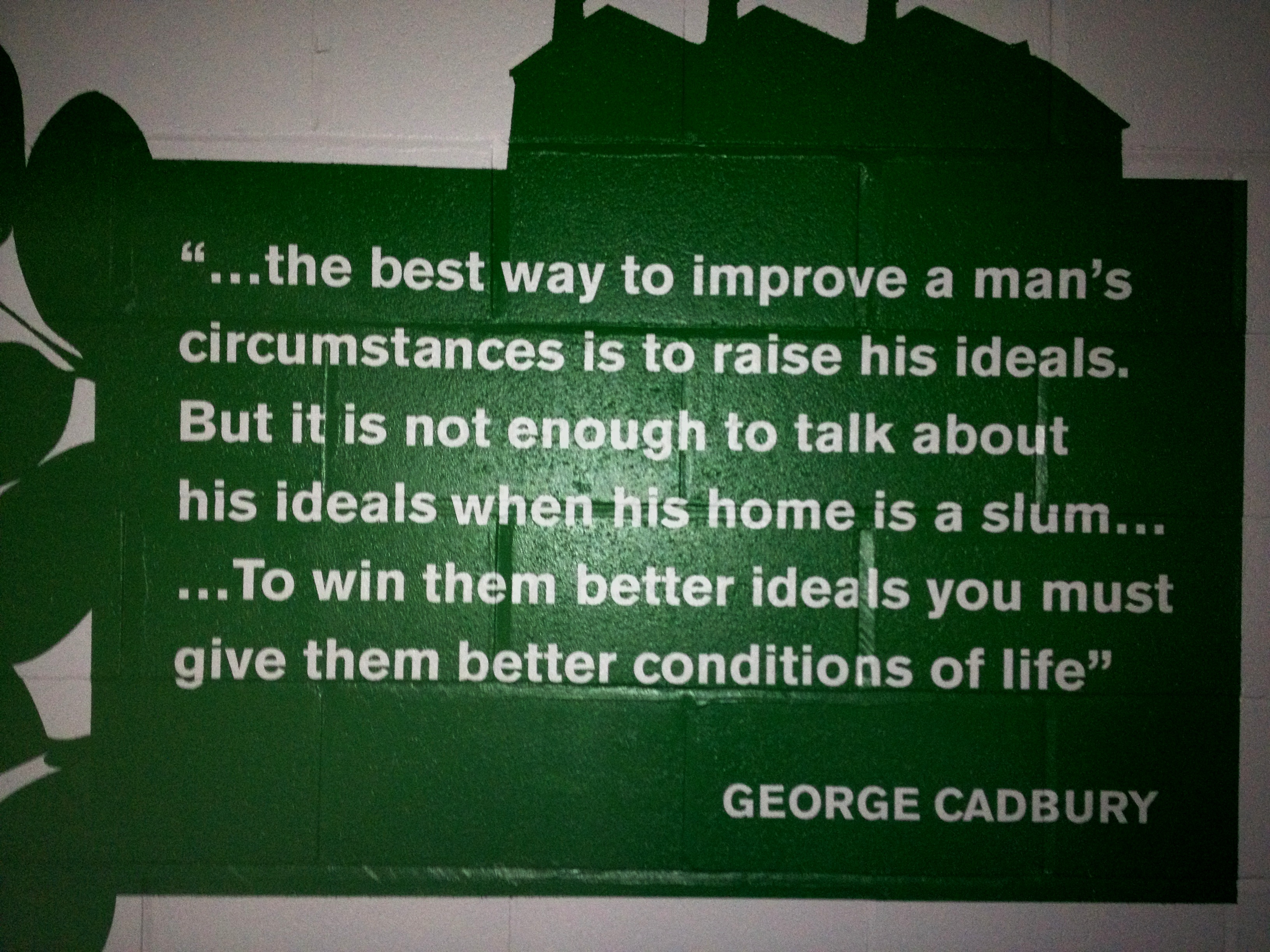
better conditions webWe then moved on to displays that demonstrated a bit of the history and processes. A friend had encouraged us to look for the Human Resource connections in the company foundations, and we were not disappointed. George and Richard Cadbury were men of great character. They obviously cared for people as well as profit… and did not sacrifice quality or integrity to accomplish both goals. There were numerous testimonies and historical evidences of the Cadbury’s commitment to their employees and their families. The Cadbury brothers provided out-of-the-norm housing and education opportunities, dental and medical care, recreation and vacation possibilities for their workers. I have often sensed the tension between people and production, but these men have proven that both can flourish together.

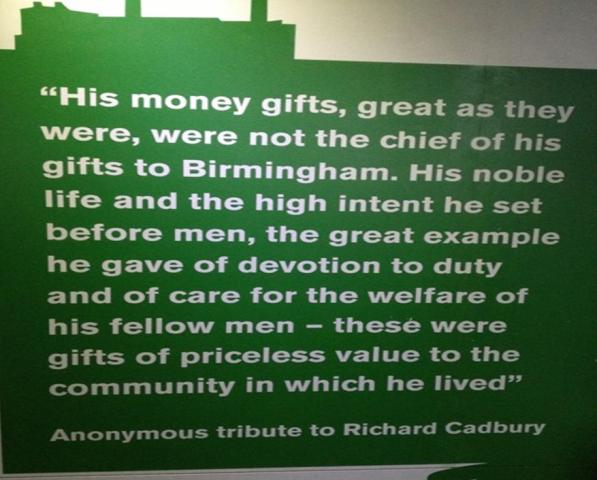
greatest gift horizontal webGeorge and Richard took care of their people by providing community. In 1879, the Cadburys expanded their facilities… and their contributions to Birmingham. The factory, called Bournville, was known as a “factory in a garden” because of the stream, green areas, and gardens all throughout. It is still a very attractive place today. The brothers built homes, schools, hospitals, reading rooms, and gardens for what became known as Bournville village. George and Richard understood that as they invested in individuals, they ensured a society change ROI also. Their example was inspiring to me as I dream about the positive impact that my actions can have in a scope much larger than my own life.

I’ve included a few references below if you’d like to read more about the Cadbury legacy. I suggest that you accompany your study with a Cadbury Milk bar or a Cadbury Egg – for maximum educational benefit!

IMGP0120

Have you experienced leaders who are able to combine care for their people and profit/success?

__________

http://www.spartacus.schoolnet.co.uk/REcadbury.htm
http://www.cadbury.com.au/about-cadbury/the-story-of-cadbury.aspx
http://candyhalloffame.org/CHoF/inductees/2005/richard-george-cadbury.shtml

St Patrick – an example of forgiveness

shamrockI’m not great at forgiving. I usually need time to let the pain or anger dissipate before I am willing to re-connect with the person that hurt me. Sometimes I struggle with reappearing memories of the wrongs done, or I want to talk badly about the other person(s).  It takes even longer for me to want to do good for that person. St. Patrick is a good example for me. Little is known of Patrick’s early life, though it is known that he was born in Roman Britain in the fourth century, into a wealthy Romano-British family. His father was a deacon and his grandfather was a priest in the Christian church.

At the age of sixteen, Irish raiders attacked his family’s estate, kidnapped him and took him captive to Ireland as a slave. He was held somewhere on the west coast of Ireland, possibly Mayo, but the exact location is not known. It is believed that he worked as a shepherd, and that he turned to his religion for solace, becoming a devote Christian. Six years later, according to his confession, God told him in a dream to flee from captivity to the coast, where he would board a ship and return to Britain. Upon returning, he joined the Church in Auxerre in Gaul and studied for years to enter the priesthood.

If I have any worth, it is to live my life for God
so as to teach these peoples;
even though some of them still look down on me.
Saint Patrick

In 432, he claimed that God called him back to Ireland, now as a bishop, to share God’s love with the Irish people – returning with a gift of good news to the country that had wronged him. Irish folklore tells that one of his teaching methods included using the shamrock to explain the Christian doctrine of the Trinity to the Irish people. After nearly 30 years of serving the Irish people, he died on the March 17, 461, and according to tradition, was buried at Downpatrick.

Although there were other more successful missions to Ireland from Rome, Patrick endured as the principal champion of Irish Christianity, is held in esteem in the Irish Church, and his life and ministry are still celebrated today.

An amazing legacy… because he did not hold a grudge against a people… because he didn’t focus on the wrongs done but was willing to forgive and do good. I can learn a lot from St. Patrick.

Do you ever struggle with forgiveness? What helps you forgive?

_______

http://www.history.com/topics/who-was-saint-patrick
http://en.wikipedia.org/wiki/Saint_Patrick
http://www.biography.com/people/st-patrick-9434729?page=1

la familia verdadera

family real compfight

Hablé dos veces esta semana acerca de mi herencia y de mi familia. También estoy disfrutando de la gran visita de mi hermana con su esposo y su hija. Estas dos experiencias me han hecho reflexionar sobre las muchas maneras en que mi familia ha formado mi identidad.

EL PASADO

Mi familia no era y no es perfecta. Hay aspectos difíciles del pasado que dejaron cicatrices emocionales y relacionales, conductas sobre-compensación y “botones calientes” que se encienden en algunas esperadas y no tan esperadas circunstancias. Afortunadamente, he aprendido a recordar los momentos positivos y edificantes… y dejar los recuerdos negativos y dolorosos detrás. Estoy muy agradecida por la fe, amigos, un esposo maravilloso y algunos grandes consejeros, que me han ayudado a seguir adelante, reconociendo la influencia del pasado, pero liberándome de sus posibles limitaciones sobre mi futuro.

EL PRESENTE

En estos días estoy ganando un mayor aprecio por mis hermanas y mi hermano al entrar en la nueva etapa de cuidar a nuestros padres ancianos. No es un momento fácil para nosotros, tenemos que trabajar muy duro para integrar diferentes puntos de vista, opiniones, disponibilidad geográfica, ideas y personalidades en las opciones y decisiones. A pesar de que somos más viejos, las actitudes y reacciones infantiles resurgen. Mis hermanos me están enseñando nuevas formas de amar y ceder mis propios intereses – esto es un buen crecimiento para mí.

EL  FUTURO

Los verdaderos desafíos enfrentados en mi matrimonio y en la crianza de mis (increíbles!) hijos han ayudado a mantenerme humilde y honesta acerca de mis insuficiencias… y se han grabado en mi corazón fuertemente la verdad y la gracia poderosa que hemos recibido en los últimos años. Estoy muy agradecida por las auténticas y hermosas relaciones que tenemos por la forma en que hemos trabajado a través de las dificultades y el dolor juntos. No preví o disfruté de las luchas – si hubiera podido, habría elegido evitarlas – pero estoy eternamente agradecida por la esperanza redentora que hemos experimentado. Espero con interés todo lo que el futuro nos pueda deparar.

He oído que los sitios como Facebook pueden causar depresión cuando la gente compara su vida real con las irreales “perfectas” vidas que asumimos de estados y fotografías superficiales. Yo sé, por experiencia, que todo el mundo tiene una historia real detrás de las sonrisas; la verdadera historia está llena de lágrimas y dolor… y el perdón y la reconciliación… y la sanidad y la esperanza. ¡La auténtica es rica!

Qué aprecias acerca de tu familia?

Cómo están manejando/llevando la vida “real” juntos?

working women of the Bible

One of the things I like best about Twitter is the new people who I have met in the tweeting process. There are some “crazies” out there as in all of life, but I have also been privileged to interact with leadership experts, soul sisters, and wise life-practitioners.

Susan DiMickele happens to be an incredible combination of all three. Susan and I have never met face-to-face, but we hope to someday. Susan tweets at: @SusanDiMickele and blogs at: www.susandimickele.com. Susan has been a trial lawyer for nearly 18 years and a mother for 12 years. She describes herself as “an author who writes about the working mom’s struggle to live out an authentic faith in a complex and fast-paced world“. Susan has written a new book that will go on sale this week! (pre-sale available now)

I had the exciting opportunity to pre-read Working Women of the Bible and provide a review of the book. This is basically what I wrote…

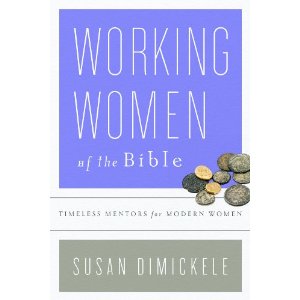
workingwomenofthebible book

Working Women of the Bible is a unique, refreshing, and encouraging book about women and work. Many believe in error that the Bible mandates all women to work only at home, barefoot and pregnant, with their main role being to serve the men in their life. Susan DiMickele demonstrates that God offers an incredible variety of work options for women of faith. . . and He has provided women mentors from many different situations to guide us. Bible stories, personal experiences, and individual reflection questions combine to create a motivating and challenging resource. The mentors you meet in this book will inspire and empower you… and your work!”

In the book’s introduction, Susan writes: As much as I try to juggle it all—home, work, marriage, kids—I often wish, “Could somebody just please show me how it’s supposed to be done?” and  Too often, we forget that the women of the Bible worked. And they worked hard. They made mistakes, and they didn’t give in. In many ways, their stories are our stories.

I really enjoyed Susan’s fresh perspective and practical applications. She helped me let go of the “superwoman” phantom and find hope in second chances. If this sounds good to you, visit your favorite book seller this week and pick up a copy of Working Women of the Bible for yourself and/or a friend. You won’t regret it!

Have you ever studied the working women of the Bible? Who is your mentor?

___________

susan dimickeleSusan is also the author of Chasing Superwoman: A Working Mom’s Adventures in Life and Faith (David C. Cook, 2010). She has authored articles in both secular and faith-based publications, including, ”War of the Worlds,” a recent article in Home Life Magazine (February 2011) that candidly discusses the need for common ground between stay-at home mothers and mothers who work outside the home. While Susan strives to be at the top of her profession, her greatest desire is to use her God-given gifts to be the woman He created.

honoring a great woman

patronsaintsmidwivessynchroblogIn honor of International Women’s Day, Sarah Bessey is hosting a link-up for us to honor the Spiritual Midwives and Patron Saints in our lives. My mind immediately began to race about all the incredible and amazing women who have graced my life…

Spiritual Midwives (those I know personally), Patron Saints (those I have never met), and precious lives that have intersected with mine through the years. I could write about so many of them…

Today I have decided to honor one woman in particular… my sister.

terry n lulu

This very special lady was instrumental in introducing me to a personal relationship with God. In her new faith, she bravely shared with me her child-like knowledge, facing my skepticism and scoffing, and her changed life was one of the key elements in my ultimate choice for saving grace. Her continued faith through the years is a great encouragement to me.

Her life has not been easy and she has had her share of struggles and stumbles along the way, but she continues forward always. She has never given up – although I know she has felt tempted. She prays for, serves, defends, and loves her husband, children, family, friends, and community. She is authentic and real about her life story, and her lack of pretense attracts others to her.

She is a faithful listener and a truth-speaker. We love to walk and talk together, and she has challenged me more than once to reconsider my heart attitude and my natural inclinations for something better. She speaks without judgement, but rather with a sincere desire to help and encourage.

My sister’s help is so often sacrificial. We have to remind her to take care of her own needs. She is hospitable, generous, creative and humble. She is often found cooking, cleaning, running errands, or babysitting for others. She has welcomed my whole crazy family into her small, cozy home for too-long periods of time more times than I could ever count. More than that, she has welcomed us into her heart.

My sister will probably never be famous outside of a small community circle, but her influence will reach the world through the people she prays for and supports.

I love you, Laura, and I honor you on this International Woman’s Day! May your legacy be an encouragement to many other woman today and in the future. ♥ ♥ ♥ ♥ ♥

_____

Who are your spiritual midwives or patron saints? Who would you like to honor today?

a promise is a promise

IWD logo 2013

A Promise is a Promise: Time for Action to End Violence Against Women

This is the theme for the March 8th, 2013, International Women’s Day activities around the world.

Although great progress has been made through the years since the 1900’s beginning of this celebration, there is still so much to be done. In some places, equitable opportunities exist for women in education, employment, access to resources and benefits, but shamefully, in other parts of our globe, women are still treated like property, abuse and violence are common, and options are excessively restricted. This needs to change.

“There is one universal truth,
applicable to all countries, cultures and communities:
violence against women is never acceptable,
never excusable, never tolerable.”

Secretary-General Ban Ki-moon

Here are some websites that you can visit to begin to learn more about the history of the day, the issues facing women presently, and how you can get involved to support and encourage the women in your life… as well as value and protect all women around our world.

YOU can make a difference. Think globally and act locally…

http://www.internationalwomensday.com/

http://www.un.org/en/events/womensday/

http://www.guardian.co.uk/world/international-womens-day

What will you do to help end violence against women?

cómo conocerte mejor

reflection morguefile web¿Te gustan las tareas? Por lo general… a mi tampoco.

Sin embargo, este otoño tuve que hacer una tarea para nuestra clase de maestría Global Leadership MA que quiero recomendarte. Ha sido, hasta ahora, la tarea más estimulante que he hecho. El ejercicio se llama “El Mejor Reflejo de Ti Mismo” (MRTM) y se encuentra completamente descrito en el artículo (en inglés) Harvard Business Review article, “How to Play to Your Strengths” from January 2005.

El ejercicio no ha sido diseñado para elevarte el ego, aunque podría hacerlo. Hace un tiempo atrás escribí acerca de que a menudo recibimos seis comentarios negativos de retroalimentación contra uno positivo. El MRTM es una herramienta sistemática para equilibrar ese porcentaje al descubrir o confirmar fortalezas y potenciales. Con algo de análisis y aplicación (hecho de la mejor manera con la ayuda de un coach), puedes usar la información obtenida para desarrollar un plan para maximizar tus talentos en el trabajo y en otras áreas de la vida.

Funciona de esta manera:

Paso 1: Identifica una variedad de personas que te den retroalimentación

Escoge de 10 a 20 personas – familia, compañeros de trabajo y jefes del presente o del pasado, amigos, etc. Envíales un correo electrónico como éste…

Apreciado(a) XXXX, 

Como parte de mi programa de desarrollo personal, estoy construyendo un perfil de las maneras en las que contribuyo y aporto cosas de valor. Me encuentro ahora contactando a veinte personas que me conocen lo suficientemente bien desde un contexto relacional – familia, amigos, compañeros de trabajo. Estoy solicitando que cada persona pueda escribirme tres historias de cuando me desempeñé de la mejor manera y de cuando mis fortalezas fueron significativas de algún modo para ellos. Quiero invitarte a ayudarme con este ejercicio.  

Aprecio que tomes el tiempo para hacer esto por mi. Por favor da ejemplos específicos para que yo pueda entender la situación y las características que estás describiendo. Un párrafo corto será suficiente. 

1. Una de las manera en las que aportas valor y contribuyes es: _______

Por ejemplo….

2. Otra manera en las que aportas valor y contribuyes es: _______

Por ejemplo….

3. Una última manera en las que aportas valor y contribuyes es: _______

Por ejemplo….

Por favor envíame tus respuestas antes del XXXXX.

¡Muchas gracias por tu ayuda! 

Paso 2: observa patrones de las respuestas obtenidas

¡Disfruta leer las respuestas de los correos electrónicos! Una buena manera de ver los temas en común es diseñar un cuadro. Podría ser parecido a este…

Tema Común Ejemplos Dados Posible Interpretación
Ética 1. Enfrenté a un compañero que estaba cruzando la línea de conducta ética.   No tengo temor de escoger lo correcto por encima de lo incorrecto.
Constructor de Equipo 1. Entrené a nuestro equipo de Softball.2. Creé un equipo de trabajo para un proyecto grande. Crezco al trabajar con otros.

Paso 3: Escribe un perfil personal y compáralo con tu vida diaria

Después de resumir la retroalimentación, te conocerás mejor y las tareas, ambiente y relaciones que te energizan y facilitan tus fortalezas. Entonces podrás evaluar dónde y qué tan a menudo haces uso de tus talentos. Esas son probablemente las veces, proyectos y situaciones en donde te encontrabas más motivado y más productivo. Si no estás usando tu mejor yo muy seguido, puedes entender por qué te sientes cansado y desmotivado.

Paso 4: Reconstruye tu trabajo 🙂

No siempre es posible reconstruir tu trabajo por completo, pero a veces hay libertad de hacer algunos ajustes claves. También podemos hacer cambios en nuestra casa para permitir más tiempo para las personas y tareas que sacan lo mejor de nosotros. Aquí es donde un coach es de ayuda – para pensar por dónde hacer los cambios… y ayudarnos a darle seguimiento.

Aprendí mucho de mi misma al hacer este ejercicio; espero que tú aprendas también. Si decides intentarlo, por favor hazme saber lo que descubres acerca de El Mejor Reflejo de Ti Mismo!

cómo formar un verdadero equipo

“Un problema que algunos equipos tienen es asumir
que son un equipo… cuando no lo son.”
Mark Miller

IMG_1068Acabo de regresar a casa después de un viaje de 10 días a la Ciudad de Panamá, Panamá. Fui parte de una conferencia del área de América Latina dirigida tanto al personal de Desarrollo de Liderazgo/Recursos Humanos (DLRH) como al personal de Operaciones de mi organización. Fue una reunión histórica; nunca habíamos tenido tantos países con representantes para esos puestos… y tampoco habíamos tenido una reunión todos juntos para enfatizar lo importante que las alianzas son en nuestro trabajo.

Me encantó la oportunidad de mentorear y entrenar a los nuevos líderes de DLRH. Fue emocionante ver su pasión y visión ser transformadas en un profundo entendimiento y pasos de acción. Estoy convencida de que habrá mucho progreso en cómo esta importante gente cuida y desarrolla al personal y a los voluntarios en sus respectivos países.

También pude disfrutar el trabajar con mi Equipo de Área de América Latina para dirigir el evento, dar las lecciones y considerar los siguientes pasos hacia el futuro. Ya que somos un equipo virtual – todos vivimos en diferentes países y nos reunimos por lo general solo por Skype – fue un gusto interactuar juntos. Antes de irme a este viaje, leí un artículo acerca de la diferencia entre grupos de trabajo y “verdaderos equipos”. Algunos de mis compañeros de equipo pusieron en práctica estos principios de verdaderos equipos mientras estuvimos juntos.

Conectar – “¿Cómo estás?”

Algunos de mis compañeros de equipo mostraron un interés genuino en mí como persona. Hicieron preguntas acerca de cómo estaba, comentarios que hice y mi vida personal – no solo trabajo. Me motivaron después de exponer alguna sesión y me dieron retroalimentación sincera acerca de lo que puedo mejorar. Me invitaron a comer junto con ellos, a ayudarle con algunas de sus tareas y a dar mi opinión en proyectos. No eramos  individuos solistas trabajando en piezas separadas de la labor; eramos interdependientes y me sentí cuidada y valorada por mis compañeros de equipo que mostraron esta característica de “verdaderos equipos”.

 Profundizar – “¿Qué necesitamos?

En algunas de nuestras conversaciones, estuvimos hablando acerca de temas emocionales, estresantes, frustrantes o desafiantes. Algunos de mis compañeros de equipo evadieron o evitaron los temas complejos y conflictivos, mientras que otros iniciaron conversaciones más profundas. Valoré cuando mis compañeros retaron mis actitudes o la manera en que lidiaba con alguno de mis sentimientos. Los miembros de “verdaderos equipos” entienden que las diferencias de perspectiva y opinión son de beneficio para el equipo, por lo tanto enfrentan y resuelven malos entendidos y conflictos. Mis compañeros desarrollaron confianza cuando invirtieron el tiempo para ver los asuntos más duros y más profundos conmigo.

Soñar – ¿Hacia dónde vamos?

Además de ver los asuntos personales y conflictivos, los miembros de mi “verdadero equipo” también tomaron tiempo para soñar con el futuro junto conmigo. A pesar de que estamos conscientes de los problemas y falta de recursos materiales y humanos, también sabemos que nuestro trabajo y esfuerzo significa que estamos progresando. Tengo en alta estima las veces que hablamos acerca de construir una cultura de cuidado, de aprender de los errores, cambiar viejos paradigmas y encontrar nueva esperanza. Esa clase de conversaciones me hace querer trabajar como parte de un “verdadero equipo”.

 ¿Has experimentado el trabajar como un “verdadero equipo”? ¿Qué elementos del “verdadero equipo” son importantes para ti?