I don’t like being sick

pillsI don’t like being sick.

I don’t like feeling weak or low energy or dependent on others. I don’t like to limit who I can see or where I can go or what I can do. I don’t like taking pills, and I avoid doctors and hospitals as much as possible. Most of my life I have been strong and healthy, so when I get sick, I usually try to just ignore it, or work through it, or get over it as fast as I can.

If I can’t do that, I tend to mope and complain, and generally act as a whiny, negative, grumpy patient.

I feel sorry for those who have to live around me or care for me.

(…and worse, I’m not much better caring for others. Let’s just say that mercy and compassion don’t come out very high on my strengths lists!) Ask my family!

However, as I thought about it this weekend, laying in bed, unable to do much else, I realized that over the years being sick has been useful in my life.

Being sick teaches me empathy for others who are ill, sometimes chronically or seriously. I have experienced – maybe just a little – of the pain, limitations, and frustrations that they have. I am less likely to criticize or judge because I can relate to what they are going through.

Being sick reminds me that rest is good occasionally – not lazy, coach potato, bring-me-a-beer-honey, all-the-time-rest, but  regular, reflective, restorative, away-from-the-routine, Sabbath-kind of rest… A few minutes a day, a day per week, a more extended time each month and each year does a person good.

Being sick helps me build healthy, reciprocal, interdependent, it’s-ok-to-ask-for-help kinds of relationships. I tend to be very independent and self-sufficient… And if I wasn’t weak now and then, I would lose out on the important character building elements of vulnerability, honesty, and need for others in my life.

I learn to better care for others by experiencing care from others. Since care isn’t my strong point, I’m not always confident about what to offer or what to do or what to say. As others do thoughtful things for me… run errands, bring food, or send a card, I get tips and ideas of how I can help others. When I am smart, I mentally file away those things to use later!

I have also grown to have a lot of respect and appreciation for those who are care-givers. I’ve been blessed a few times in my life by doctors, nurses, family and friends who did an incredible job when I, or someone I love, needed special care. Their work is so important and their willing, servant attitudes, add a ray of sunshine to a gloomy day.

So, honestly, I still don’t like being sick…. Who does? At least I can I handle it a little better when I can see some good in it… and that turns out better for everyone involved!

How do you handle being sick?
family tension

rope
I spent this past holiday with my children, my brother and sisters, my mom (and her husband of 25+ years) and my dad. There were some fun, laughter-filled, memory-building times together. There were also some conflicts, differences of opinion, and hurt feelings.

There was tension.

Dictionaries define tension as being stretched, strained or stressed, mentally or emotionally. It can involve uneasiness, nervousness, anxiety or a strained relationship. It results in “walking on eggshells”, or it can reach a level of hostility.

Tension can also serve a positive purpose. Tension is necessary for a sewing machine to weave the threads together well, for a bow to launch the arrow to its target, for the sailor’s knot to hold tight. High-tension wires carry electrical power over long distances. Tension is something we desire on car alternator, air conditioner and vacuum cleaner belts. According to Fretag’s Pyramid, we intentionally build tension when writing a successful fiction novel. Arterial tension maintains blood pressure in an artery; surface tension preserves the integrity of a surface, and tissue tension enables a state of equilibrium between tissues and cells. Sexual tension can lead to great enjoyment between a husband and wife.

All that to clarify…

not all tension is bad.

One of the tensions I experienced was between “my” family traditions and the extended family traditions. There is not one right way and one wrong way to celebrate holidays; it much more complex than that. So when I travel to spend Christmas or Thanksgiving or any other key event with other family members, I yield a bit of my preferences… and I miss a bit of how I like to do things. On the other hand, I gain the richness of new experiences and family times. The tension is not necessarily bad; but it is helpful to acknowledge and process it.

How do you deal with tension over family traditions? 

Another tension I had to deal with were the relationship tensions due to different personalities, expectations, communication styles, and conflict resolution strategies. My sisters and I are all very different. We are facing challenges and big decisions regarding our aging parents; we have different opinions about the options, and we use different communication methods to express those opinions. I’m not always sure whether to push for an open discussion or whether to give a sister space and time. Intellectually I know that our differing approaches, respectfully considered, will lead us to better solutions in the end. Emotionally I am learning to accept – and not fear – the tension.

How do you handle family relationship tensions?

A last tension occurred as I interacted with my children. As they have grown and matured, I have wrestled with when to “circle the wagons” to restrict and protect… and when to trust and let go. Now that they are older, I still struggle with when to offer my advice and “coaching”… and when to just give grace, believe the best, and trust them to make their own decisions. As parents, we have taught them our heart passions and values; now they will choose their own way. Sometimes I worry. Sometimes we have deep talks. Sometimes I pray and find peace. Either way, I recognize that this tension is good – it means we are all growing and changing.

How do you manage the “what’s my role?” tensions?

Life’s tensions are stretching me. I am recognizing my selfish, inappropriate and inadequate reactions, and I hope to grow to better handle the tension. Tension is here to stay; I want to embrace the tension and the benefits that it can bring to life.

_________________

It is a privilege for me to write for Missional Women. This post was originally published there. You may want to check out their other great content!

missional women button

what women add to a team

Business TeamDo you remember that awkward elementary school experience – two scrawny kids choosing the players for their team? There was always a tension between picking a friend because you liked them and picking a “star” because you wanted to win.

Whether it was a debate team or a football team, you needed a variety of players to cover offense and defense. Your choices didn’t always work out as planned. The thick glasses didn’t always guarantee intelligence any more than extra height ensured skill under the basket, but certain general characteristics proved to increase your chances for victory.

I firmly believe that men and women live and work best together in partnership, and I have experienced many times that the best teams are often diverse, not only in gender, but also in age, personality, strengths, and cultural background.

Earlier, I wrote about some of the challenges facing diversity, specifically gender diversity on leadership teams. I mentioned that more information can often facilitate positive change. Here are some ways that women’s participation makes teams healthier and stronger. I have also listed some articles below that support these three points. 

Men and women are like two feet—
they need each other to get ahead.
Helen E. Fisher

Women add integrity.

In my experience, the women on my teams consistently committed to maintaining a high standard of fiscal, legal, and labor integrity. When women participated on the teams, we implemented accountability systems, complied with necessary policies and laws, and quickly investigated decisions that appeared questionable. Financial partners, funding, and the organizational reputation for integrity increased as a result. When women participate on a team, there is great potential to build a strong ethical, moral, and integral foundation. 

Women strengthen collaboration.

On mixed teams, the team members rarely worked alone in siloed responsibilities. Instead, the women facilitated true teamwork by ensuring regular communication and interaction, systematic sharing of ideas, and fostering a healthy feedback culture. They promoted honest personal and productivity evaluations. The women were approachable, quick to ask clarifying questions, reciprocally helpful, and loyally supportive of team decisions. Mixed gender teams often led to better ideas, better decisions, and greater productivity and growth.

Women foster personal development.

The women I worked with prioritized personal and team development, often establishing strong mentoring relationships and coaching. They actively demonstrated concern for team member’s growth and well-being. The women readily participated in 360 evaluations, team building activities, and conflict resolution. They were good listeners, discerning, and keenly aware when alignment was missing. They were often very successful at recruiting, training and empowering their future replacements. Women leaders contribute to the effectiveness of a team’s leadership pipeline. 

I believe that great leadership ultimately depends on character, and that calling, competency and chemistry are also important for successful teamwork. Diverse teams do not ensure automatic success, but in our complex and constantly changing society, I am certain that they are one of our wisest recruiting strategies.

How have you seen women add to your teams?

McKinsey & Company. (2008). Female leadership, a competitive edge for the future. Paris, France.
Zenger, Jack and Folkman, Joseph. “Are women better leaders than men?” blogs.HBR.org. March 15 2012. Web. Jan. 26 2013.

why is diversity so hard?

studying togetherWhy is it so hard?

I often asked this question regarding my children when they couldn’t seem to get along. I have asked it about financial integrity, about exercise discipline, and about conflict resolution. These good goals seem to immediately attract excuses, emotional responses, and resistance as soon as we mention them.

Today, however, I ask it about men and women working together with mutual respect, equal opportunity, and sincere appreciation of the varied passions and strengths that both bring to the table.

Why is diversity so hard?

Why haven’t we been able to eliminate the disrespectful jokes and comments? Why don’t we apply the abundant literature that states how important it is to have gender diversity on teams and in leadership in order to increase the health and productivity of our organizations? Why do we continue to make excuses for antiquated policies and “old school” leaders that we know need to change? Why aren’t we willing to have honest and open discussions about moving beyond stereotypical criticisms and moving toward understanding, equity, flexibility, and progress?

I have actually been blessed to work in many situations and on many teams where men and women contributed and collaborated well together as unique individuals, valuing and appreciating variety in gender – as well as culture, age, experience, and expertise. Sadly, I have also worked in settings where people chose sides in constant battles for respect and opportunity.

I don’t believe there is any legitimate reason for such disparity and division between men and women. My faith tells me the root cause is our selfish sin…. thinking more highly of ourselves than we think of others, which leads to lack of respect, competition, insecurity and defensiveness. Maybe that is why this struggle is so entrenched and why it is so hard to defeat.

Although I get weary of the conflicts and I don’t have answers to all the questions, I think this challenge is worth fighting for – just like sibling love, balanced budgets, a strong body, and healthy relationships. Excuses, emotions, and resistance yield to information, open communication, and accountability for positive change. Offenses can transform into advocacy. I’d like to see grand-scale improvement, but many days I accept being content with small steps of progress. I start with changes in my life, and then I move to being an example for others. Maybe it will always be hard… but it can get better.

One day our descendants will think
it incredible that we paid so much attention to things
like the amount of melanin in our skin
or the shape of our eyes or our gender
instead of the unique identities of each of us
as complex human beings.
-Franklin Thomas

What do you do with hard situations? How do you bring about change?

pick your heros carefully

“Show me a hero, and I’ll write you a tragedy.”
F. Scott Fitzgerald

Lance_Armstrong_Tour_de_Gruene_2008-11-01

A few TV shows caught my attention this week: Golden Globe Awards, Australian Open, NFL playoffs, American Idol… and, of course, Oprah’s interview with Lance Armstrong.

Big stars. Famous names. Wealth. Amazing talent.

Actors, athletes, and musicians make my heart swoon with their music, my adrenaline race with their feats, and my imagination soar with their stories. I admire their appearance, skill, charisma, and money.

But should I choose them as my heroes?

What do I really know about their character? Integrity? Values? Relationships? Behind closed doors, are they honest? Faithful? Kind? Can I trust them?

According to the dictionary, a hero is someone admired for courage or noble qualities.

An idol is often visible but without substance.

“A hero is someone who understands the responsibility
that comes with his freedom.”
Bob Dylan

Are the heroes I set on a pedestal responsible with their talent, resources, time? Do they invest in others or indulge only in their own desires?

“Never be surprised at the crumbling of an idol
or the disclosure of a skeleton.”
John Emerich Edward Dalberg

Time after time I grieve when my heroes prove that they are only superficial glitter and sparkle while hiding internal turmoil of substance abuse, broken relationships, lies, corruption, and failure of all kinds.

Will my heroes sustain the test of time? Will they still deserve my respect and my attention after many years have passed, or will they be blaming others, hiding in shame, or spending time in prison?

 “The idol of today pushes the hero of yesterday out of our recollection;
and will, in turn, be supplanted by his successor of tomorrow.”

Washington Irving

The winners of today’s awards, tournaments, and rankings are so quickly forgotten. I want a hero who is authentic, quick to confess errors, generous with others, and whose impact and influence do not reside in a metal statue – but rather, engrave good on my heart and produce growth in my life.

How do you choose your heroes? 

a coaching process you can use

I get my love of sports from my Mom. Actually my Dad also encouraged my individual sports (tennis, skiing, running), but Mom is the one who loves all team sports and watches the games faithfully. I even like sports movies, especially those where the underdog team or player rallies to a miraculous win at the end.

Coach - courtesy of morgueFile free photosIn all of those movies and in real life, the person who inspires, comes alongside, and brings out the player’s best for the unexpected, against-all-odds, fist-pumping success is the coach. A great coach knows the player’s strengths and weaknesses, and they believe that the player can grow and improve. The coach cannot do the hard work for the player, but they can help the player move forward towards their dream.

Even outside of sports, coaching is important. Parenting older children, mentoring friends, and professional job situations all offer opportunities to coach.In our organization we use a coaching process that is transformational for coaching situations. Instead of trying to fix the problem or give advice, this simple process guides a conversation from the present “Where are you now?” to the future “Where do you want to be?”

The first step is to focus the conversation. Ask the person being coached, “What can I help you with today?” or “What would be most helpful for you to discuss today?” or “What is the focus of our appointment?” It may take a while for them to distill their needs or thoughts into a simple answer, but this is important since there is no way to work intentionally on an unclear goal.

Second, explore options. Brainstorm without a commitment to any particular idea at this time. The coach asks, “How do you think you could…?” “What are ways you might…?” “Where could you find…?” “Who could help you with…?”

Third, plan next steps. After brainstorming many options, it is time for the person to choose the best option that surfaced. It is important to ensure that the chosen option is SMART: specific • measureable • achievable • relevant • timely (due date). Help your coachee plan carefully and completely by asking them, “And then…? And then…?”

A crucial, but often neglected, fourth step is to address the obstacles. Good coaches deal with reality. Assuming a simple, clear, unchallenged path to the goal is naive. A really big obstacle might return the conversation to the second step to explore other options; the discussion does not have to be linear.

Last, take time to allow the coachee to review and close. The coach should not do the review. Make sure the person being coached can summarize what they have decided to do and who will hold them accountable for their plan.

A first conversations using this process may feel stiff or unnatural – probably because we usually do a lot more talking and a lot less question-asking – but it will feel more comfortable with practice. You will like the results. As you coach, praying, observing, and listening well are key.

… And don’t forget to celebrate and encourage the “wins”! A good coach knows how to do the vocal-cord-stressing, all-body gyrating, don’t-cares-who-sees-me victory dance along with their players!

Who could you take through this coaching process? How can you improve your coaching skills?

This printable card can help you remember this coaching process. __________________________________

missional women button

(It is a privilege for me to write as a contributor for Missional WomenThis post was originally published there.)

write your new year’s snapshot

“Few will have the greatness to bend history itself; but each of us can work to change a small portion of events, and in the total of all those acts will be written the history of this generation.”
              Robert Francis Kennedy ( U.S. attorney general and adviser, 1925-1968)

The New Year is a great time for new ideas. I have already picked my word for this year (20162015, 20142013), but there is another new thing I want to try this year. I heard about this idea at the start of our one year assignment, but think it would apply very well to the start of this new year also.

pens morguefileThe idea is to take some time and write a sort of status report of where you are today. This could include life-stage, personal challenges, emotions, projects, ideas, dreams or concerns with family, friends, or work. There isn’t any rule to it; just write about who you are and what you are doing today.

Next, file the paper (or digital note) away… until next year at this time. It is not a plan, so you don’t need to look at it, refer to it, or edit it all year. It is simply a record. A snapshot. A memory. I have a hard time remembering what I was thinking and/or feeling just a few days – or even moments  – ago if I don’t write it down. This report will capture and save today’s reality.

In a year, it will be very interesting to review the recorded history. What will have changed? Were there surprises? Interruptions? Progress? Greater-than-expected challenges? Did growth happen? Healing? Completed goals? Accomplished dreams? Or at least steps towards the dream?

They say that we usually greatly overestimate what we can accomplish in a day… and greatly underestimate what we can accomplish in a year.

This could be a good – yet simple – way to observe what happens in a year. I’m going to write my snapshot this week… will you write yours too?

courage – a word for 2013

Courage File Drawer Label Isolated on a White Background.

Do you ever need courage?

I have chosen courage as my word for 2013.

Last year I picked the word authentic; I have tried to be authentic with my fears, emotions, needs… and also with what I wrote here on this blog.

This year I know I am going to need courage…

My family is facing my mom’s terminal cancer diagnosis. We will need courage to face death bravely so that we are thoughtful and thorough in our help and preparations. A lot of people are afraid of dying… and afraid of pain… and afraid of loss. My mom and family will face those fears; I don’t want my fears to make it any worse for them… I will need courage to face the crisis and challenges this year brings. 

Crisis can cause a lot of stress in the relationships for those involved. When there is stress in my life, I often react with impatience and criticism of my husband, my family and my friends. I sometimes pull away and isolate myself with an “I’m the only one who______” attitude. I am often too tired emotionally to make the effort to face conflict for fear of getting hurt or making things worse. I will need courage in my relationships.

This next year will bring a lot of change for me. We will move again and change jobs, since our assignment this year is a temporary situation. This may involve a trip across town and a new desk, or it might mean a different state or even a different country. It will certainly mean more work, some sad good-bye’s, meeting new people and learning new things. I will need courage to accept and adjust to the changes.

Finally, I think about me – my character, my personality, my strengths and weaknesses, my faith. A times, the scariest thing of all is doing a good, deep look inside and evaluating what I see. It is easier to stay busy running from one thing to another and miss time to reflect on: Who am I? Am I satisfied with who I am now? What do I need to change? Where do I need to grow? I am going to intentionally slow down this year and leave some time for this kind of reflection. I will need courage to grow personally.

So courage is my word for 2013.  Please follow along and see how this word gets worked out in 2013!

And for you? Have you taken some time to think about what you need or want for 2013? What is your word?

2012 in review – WordPress

The WordPress.com stats helper monkeys prepared a 2012 annual report for the Maturitas Cafe blog. It’s interesting to see all that has happened in the last year!

Here’s an excerpt:

4,329 films were submitted to the 2012 Cannes Film Festival. This blog had 14,000 views in 2012. If each view were a film, this blog would power 3 Film Festivals

Click here to see the complete report.

maturitas cafe – best of 2012

I would love to enjoy a steaming cup of black coffee with you at a comfy, warm cafe. We could talk about so many things – work, family, teams, marriage, life! We might laugh or cry or philosophize, and share advice or struggles or funny stories. We might disagree about a topic or empathize completely. No matter what, I know we would end our visit grateful for the time together.

Until we have that opportunity, I am grateful for the chance to connect this way. THANK YOU for reading and leaving your “likes” and your comments. You have challenged me and encouraged me this year. You have led me to new blogs, new ideas, new friends. I appreciate you very much and look forward to learning more together in 2013!

In case you are new to this blog or might have missed a post, here are some of the top (most read) posts of 2012. Feel free to look around at the archives too. Remember every post is available in English and Spanish…

eng top 5top five English posts:

today’s modern woman – pick any two

cleaning house, cooking meals and a greater cause

are you dangerous?

communication styles

tips for long lasting friendship and marriage

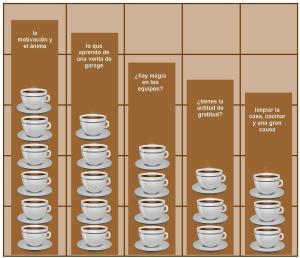
sp top 5top five Spanish posts:

la motivación y el ánimo

lo que aprendo de una venta de garage 

¿hay mágia en los equipos?

¿tienes la actitud de gratitud?

limpiar la casa, cocinar y una gran causa

You might also enjoy reading a little about me and why I started this blog:

coffee as a way of life      why a blog?

 Thanks for joining this journey! 

Please let me know… what was your favorite post this past year?