who do you trust?

Easter is one of the most reflective seasons of the year. Many people consider faith options during this time, searching for truth, peace, and purpose. When I was in college, I found these things for my life in a personal relationship with God. I took time to investigate options, ask questions, study further… eventually I trusted in what Christ did for me on the cross, rather than in my own efforts. That decision changed my life; it gives me hope for each day and security for my eternal future.

If you are searching, questioning or studying… I offer you this video as part of your process. Our ministry, cru, created these four minutes of powerful visual images to help people understand God’s love and forgiveness, and the reason we celebrate Easter = Christ’s death and resurrection for us. I hope you enjoy it and that it is helpful for your own personal journey. Let me know what you think!


bitter is not better

dark chocBitter may be OK for dark chocolate, herbs, or ales, but it is not good for people.

Bitterness is so ugly.
Amy Heckerling

The last few weeks, I heard numerous times about the need to fight against becoming a bitter person. I’m not sure if people were seeing the tendency in me, but I have decided to take the counsel seriously. We all have the ability to become bitter people; life is hard, but we choose how we will respond to the hits that life brings our way.

We start out life very naive and optimistic. We believe that we can do anything if we work hard enough, and we live our days with a (false) sense of immortality and invincibility. We erroneously think we can easily choose our career path, change our spouse, and control our children.

Somewhere between 30-50 years old, we discover that life did not turn out like we thought it would. Individuals and families struggle with terminal illness, unemployment, prodigal children, tragic accidents, incurable medical disorders, loved one’s early deaths, long-term singleness, separation and divorce… unexpected, unplanned, and unavoidable chips to our perfectly manicured world. We get hurt in relationships that cause conflict, under-appreciate and undervalue our work, misunderstand and overlook our contributions. Life is hard – really hard.

It is a simple but sometimes forgotten truth
that the greatest enemy
to present joy and high hopes
is the cultivation of retrospective bitterness.

Robert Menzies

If we focus on negative circumstances, compare our life with others’, or refuse to forgive wrongs, we harden our heart and pave a path toward bitterness. We find ourselves critical, complaining, angry and discouraged with life. It is natural and easy to do.

On the other hand, if we practice gratitude, contentment, and peace with others – even during the hard times – we can pass through our struggles singed by real life, but not burned and destroyed. The pain is real, but it does not have to define us.

Bitterness imprisons life; love releases it.
Bitterness paralyzes life; love empowers it.
Bitterness sours life; love sweetens it.
Bitterness sickens life; love heals it.
Bitterness blinds life; love anoints its eyes.

Harry Emerson Fosdick

I do not want bitterness to control my life. I am praying and asking others to help me process the hard experiences in my life so that I respond with love instead.

How do you fight bitterness? Do you need to ask someone for help?

chocolate, character and community

I love chocolate. Chocolate cake, chocolate cookies, chocolate pie, chocolate brownies, chocolate candy (especially with nuts). I can easily pass on most sweets… but not chocolate. Over the years, my tastes have drawn me to dark chocolate. That is now my unquestionable favorite.

yum webWhen I was recently in Birmingham in the UK, we had the opportunity to tour the Cadbury factory. What a treat! I have always enjoyed learning about how things are made, but chocolate… the best of all worlds! It was a chilly day for walking around… but so worth it! Our first stop included a sample of warm, melted chocolate over our choice of toppings. It was amazingly delicious – as you can tell!

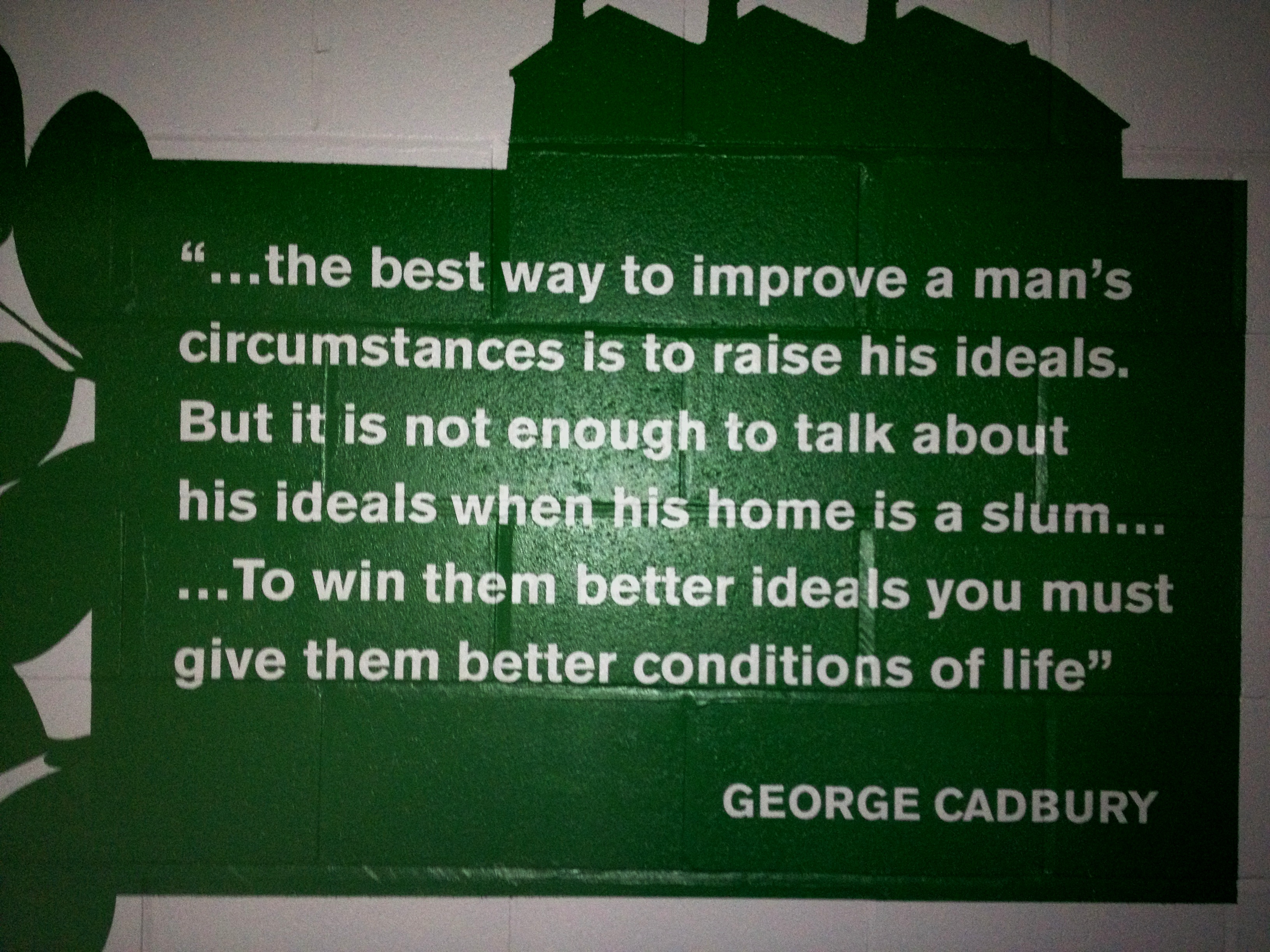
better conditions webWe then moved on to displays that demonstrated a bit of the history and processes. A friend had encouraged us to look for the Human Resource connections in the company foundations, and we were not disappointed. George and Richard Cadbury were men of great character. They obviously cared for people as well as profit… and did not sacrifice quality or integrity to accomplish both goals. There were numerous testimonies and historical evidences of the Cadbury’s commitment to their employees and their families. The Cadbury brothers provided out-of-the-norm housing and education opportunities, dental and medical care, recreation and vacation possibilities for their workers. I have often sensed the tension between people and production, but these men have proven that both can flourish together.

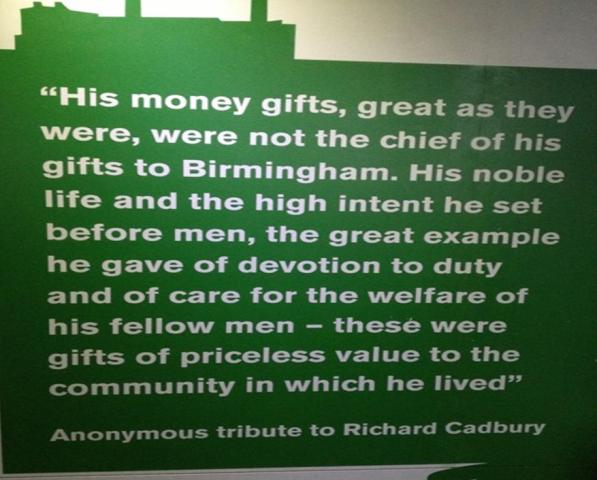
greatest gift horizontal webGeorge and Richard took care of their people by providing community. In 1879, the Cadburys expanded their facilities… and their contributions to Birmingham. The factory, called Bournville, was known as a “factory in a garden” because of the stream, green areas, and gardens all throughout. It is still a very attractive place today. The brothers built homes, schools, hospitals, reading rooms, and gardens for what became known as Bournville village. George and Richard understood that as they invested in individuals, they ensured a society change ROI also. Their example was inspiring to me as I dream about the positive impact that my actions can have in a scope much larger than my own life.

I’ve included a few references below if you’d like to read more about the Cadbury legacy. I suggest that you accompany your study with a Cadbury Milk bar or a Cadbury Egg – for maximum educational benefit!

IMGP0120

Have you experienced leaders who are able to combine care for their people and profit/success?

__________

http://www.spartacus.schoolnet.co.uk/REcadbury.htm
http://www.cadbury.com.au/about-cadbury/the-story-of-cadbury.aspx
http://candyhalloffame.org/CHoF/inductees/2005/richard-george-cadbury.shtml

St Patrick – an example of forgiveness

shamrockI’m not great at forgiving. I usually need time to let the pain or anger dissipate before I am willing to re-connect with the person that hurt me. Sometimes I struggle with reappearing memories of the wrongs done, or I want to talk badly about the other person(s).  It takes even longer for me to want to do good for that person. St. Patrick is a good example for me. Little is known of Patrick’s early life, though it is known that he was born in Roman Britain in the fourth century, into a wealthy Romano-British family. His father was a deacon and his grandfather was a priest in the Christian church.

At the age of sixteen, Irish raiders attacked his family’s estate, kidnapped him and took him captive to Ireland as a slave. He was held somewhere on the west coast of Ireland, possibly Mayo, but the exact location is not known. It is believed that he worked as a shepherd, and that he turned to his religion for solace, becoming a devote Christian. Six years later, according to his confession, God told him in a dream to flee from captivity to the coast, where he would board a ship and return to Britain. Upon returning, he joined the Church in Auxerre in Gaul and studied for years to enter the priesthood.

If I have any worth, it is to live my life for God
so as to teach these peoples;
even though some of them still look down on me.
Saint Patrick

In 432, he claimed that God called him back to Ireland, now as a bishop, to share God’s love with the Irish people – returning with a gift of good news to the country that had wronged him. Irish folklore tells that one of his teaching methods included using the shamrock to explain the Christian doctrine of the Trinity to the Irish people. After nearly 30 years of serving the Irish people, he died on the March 17, 461, and according to tradition, was buried at Downpatrick.

Although there were other more successful missions to Ireland from Rome, Patrick endured as the principal champion of Irish Christianity, is held in esteem in the Irish Church, and his life and ministry are still celebrated today.

An amazing legacy… because he did not hold a grudge against a people… because he didn’t focus on the wrongs done but was willing to forgive and do good. I can learn a lot from St. Patrick.

Do you ever struggle with forgiveness? What helps you forgive?

_______

http://www.history.com/topics/who-was-saint-patrick
http://en.wikipedia.org/wiki/Saint_Patrick
http://www.biography.com/people/st-patrick-9434729?page=1

working women of the Bible

One of the things I like best about Twitter is the new people who I have met in the tweeting process. There are some “crazies” out there as in all of life, but I have also been privileged to interact with leadership experts, soul sisters, and wise life-practitioners.

Susan DiMickele happens to be an incredible combination of all three. Susan and I have never met face-to-face, but we hope to someday. Susan tweets at: @SusanDiMickele and blogs at: www.susandimickele.com. Susan has been a trial lawyer for nearly 18 years and a mother for 12 years. She describes herself as “an author who writes about the working mom’s struggle to live out an authentic faith in a complex and fast-paced world“. Susan has written a new book that will go on sale this week! (pre-sale available now)

I had the exciting opportunity to pre-read Working Women of the Bible and provide a review of the book. This is basically what I wrote…

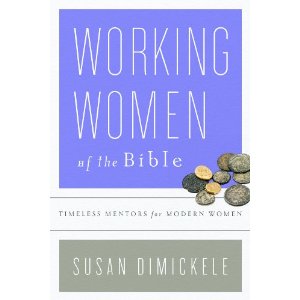
workingwomenofthebible book

Working Women of the Bible is a unique, refreshing, and encouraging book about women and work. Many believe in error that the Bible mandates all women to work only at home, barefoot and pregnant, with their main role being to serve the men in their life. Susan DiMickele demonstrates that God offers an incredible variety of work options for women of faith. . . and He has provided women mentors from many different situations to guide us. Bible stories, personal experiences, and individual reflection questions combine to create a motivating and challenging resource. The mentors you meet in this book will inspire and empower you… and your work!”

In the book’s introduction, Susan writes: As much as I try to juggle it all—home, work, marriage, kids—I often wish, “Could somebody just please show me how it’s supposed to be done?” and  Too often, we forget that the women of the Bible worked. And they worked hard. They made mistakes, and they didn’t give in. In many ways, their stories are our stories.

I really enjoyed Susan’s fresh perspective and practical applications. She helped me let go of the “superwoman” phantom and find hope in second chances. If this sounds good to you, visit your favorite book seller this week and pick up a copy of Working Women of the Bible for yourself and/or a friend. You won’t regret it!

Have you ever studied the working women of the Bible? Who is your mentor?

___________

susan dimickeleSusan is also the author of Chasing Superwoman: A Working Mom’s Adventures in Life and Faith (David C. Cook, 2010). She has authored articles in both secular and faith-based publications, including, ”War of the Worlds,” a recent article in Home Life Magazine (February 2011) that candidly discusses the need for common ground between stay-at home mothers and mothers who work outside the home. While Susan strives to be at the top of her profession, her greatest desire is to use her God-given gifts to be the woman He created.

honoring a great woman

patronsaintsmidwivessynchroblogIn honor of International Women’s Day, Sarah Bessey is hosting a link-up for us to honor the Spiritual Midwives and Patron Saints in our lives. My mind immediately began to race about all the incredible and amazing women who have graced my life…

Spiritual Midwives (those I know personally), Patron Saints (those I have never met), and precious lives that have intersected with mine through the years. I could write about so many of them…

Today I have decided to honor one woman in particular… my sister.

terry n lulu

This very special lady was instrumental in introducing me to a personal relationship with God. In her new faith, she bravely shared with me her child-like knowledge, facing my skepticism and scoffing, and her changed life was one of the key elements in my ultimate choice for saving grace. Her continued faith through the years is a great encouragement to me.

Her life has not been easy and she has had her share of struggles and stumbles along the way, but she continues forward always. She has never given up – although I know she has felt tempted. She prays for, serves, defends, and loves her husband, children, family, friends, and community. She is authentic and real about her life story, and her lack of pretense attracts others to her.

She is a faithful listener and a truth-speaker. We love to walk and talk together, and she has challenged me more than once to reconsider my heart attitude and my natural inclinations for something better. She speaks without judgement, but rather with a sincere desire to help and encourage.

My sister’s help is so often sacrificial. We have to remind her to take care of her own needs. She is hospitable, generous, creative and humble. She is often found cooking, cleaning, running errands, or babysitting for others. She has welcomed my whole crazy family into her small, cozy home for too-long periods of time more times than I could ever count. More than that, she has welcomed us into her heart.

My sister will probably never be famous outside of a small community circle, but her influence will reach the world through the people she prays for and supports.

I love you, Laura, and I honor you on this International Woman’s Day! May your legacy be an encouragement to many other woman today and in the future. ♥ ♥ ♥ ♥ ♥

_____

Who are your spiritual midwives or patron saints? Who would you like to honor today?

a promise is a promise

IWD logo 2013

A Promise is a Promise: Time for Action to End Violence Against Women

This is the theme for the March 8th, 2013, International Women’s Day activities around the world.

Although great progress has been made through the years since the 1900’s beginning of this celebration, there is still so much to be done. In some places, equitable opportunities exist for women in education, employment, access to resources and benefits, but shamefully, in other parts of our globe, women are still treated like property, abuse and violence are common, and options are excessively restricted. This needs to change.

“There is one universal truth,
applicable to all countries, cultures and communities:
violence against women is never acceptable,
never excusable, never tolerable.”

Secretary-General Ban Ki-moon

Here are some websites that you can visit to begin to learn more about the history of the day, the issues facing women presently, and how you can get involved to support and encourage the women in your life… as well as value and protect all women around our world.

YOU can make a difference. Think globally and act locally…

http://www.internationalwomensday.com/

http://www.un.org/en/events/womensday/

http://www.guardian.co.uk/world/international-womens-day

What will you do to help end violence against women?

how to form a real team

“One of the problems some teams have is the assumption
they are a team… when they aren’t.”
Mark Miller

IMG_1068I am just home from a 10 day trip to Panama City, Panama. I was part of a Latin America area-wide conference for both Leadership Development/Human Resources (LDHR) and Operations personnel in my organization. It was a historic meeting; we’ve never had that many country representatives for those positions… and we’ve never held a meeting together to emphasize how important partnership is in our work.

I loved the opportunity to mentor and coach the new LDHR leaders. It was thrilling to watch their vision and passion transform into deeper understanding and action steps. I believe there will be a lot of progress in how these important people care and develop the staff and volunteers in their respective countries.

I also enjoyed working with my Latin America Area Team to lead the event, teach the lessons, and consider future next steps. Since we are a virtual team – we all live in different countries and meet usually only by Skype – it was a treat to interact together. Before I left for the trip, I read an article about the difference between work groups and “real teams”. Some of my teammates put these principles of real teams in action while we were together.

Connect – “How are you doing?”

Some of my teammates showed true interest in me as a person. They asked questions about how was I doing, comments I made, and my personal life – not just our work. They encouraged me after I taught a session, and they gave sincere feedback about how to improve. They invited me to eat meals with them, to help with some of their tasks, and to give my opinion on projects. We were not just siloed individuals working alone on separate pieces of the job; we were interdependent, and I felt valued and cared for by my teammates who demonstrated this characteristic of “true teams”.

Deepen – “What do we need?”

In some of our conversations, we were talking about emotional, stressful, frustrating or challenging topics. Some of my teammates avoided or tabled the complex and conflicting issues, while others actually initiated the deeper conversations. I really appreciated it when my team mates challenged my attitudes or the way I was dealing with some of my feelings. “True team” members understand that differing perspectives and opinions are a benefit to teamwork, and so they face and resolve misunderstandings and conflict. My teammates built trust when they invested the time to look at the harder, deeper issues with me.

Dream – “Where are we going?”

Besides looking at personal and conflict issues, my “real team” members also took time to dream about the future together with me. Although we are aware of problems and lack of resources and man-power, we also knew that our work and our efforts meant we are making forward progress. I greatly valued the times when we talked about building a caring culture, learning from mistakes, changing old paradigms, and finding new hope. That kind of conversation makes me want to work as part of the “real team”.

Have you experienced working as a “true team”? What elements of “true team” are important to you?

appreciating (real) family

family real compfight
I spoke twice this week about my heritage and my family. I am also enjoying a great visit from my sister with her husband and daughter. These two experiences have caused me to reflect on the many ways that my family has formed my identity.

PAST

My family was not and is not perfect. There are difficult aspects of the past that left emotional and relational scars, over-compensating behaviors, and “hot buttons” that ignite in some expected and some not-so-expected circumstances. Thankfully, I have learned to remember the positive and character building moments… and to leave the negative and hurtful memories behind. I am so grateful for faith, friends, an awesome husband, and a few great counselors, who have helped me to move forward, acknowledging the past’s influence but freeing me from its potential limitations on my future.

PRESENT

These days I am gaining a greater appreciation for my sisters and my brother as we enter the new stage of caring for our elderly parents. It is not an easy time for us; we have to work very hard at integrating many different viewpoints, opinions, geographical availability, ideas, and personalities into choices and decisions. Although we are older, childhood attitudes and reactions resurface. My siblings are teaching me new ways to love and yield my own interests – this is good growth for me.

FUTURE

The real challenges faced in my marriage and in raising my (amazing!) children have helped to keep me humble and honest about my inadequacies, my insufficiency… and have engraved on my heart the incredibly powerful truth and grace that we received over the years. I am very grateful for the authentic and loving relationships that we have because of how we have worked through difficulties and pain together. I did not anticipate or enjoy the struggles – if I could have, I would have chosen to avoid them – but I am eternally thankful for the redeeming hope that we have experienced. I look forward to whatever the future might hold for us.

I’ve heard that sites like Facebook can cause depression when people compare their real lives with the unrealistic “perfect” lives that we assume from superficial statuses and photographs. I know, from experience, that everyone has a real story behind the smiles; the real story is full of tears and hurt… and forgiveness and reconciliation… and healing and hope. Real is rich.

What do you appreciate about your family?
How are you handling “real” life together?

how to know yourself better

reflection morguefile webDo you like homework? Neither do I… usually.

However, this fall I had to do a homework assignment for our Global Leadership MA class that I want to recommend to you. It was, by far, the most encouraging homework assignment I have ever done. The exercise is called “Your Reflected Best Self” (RBS), and it is fully described in the Harvard Business Review article, “How to Play to Your Strengths” from January 2005.

The exercise is not designed to build your ego, although it might do that. A while back I wrote about how we often receive six comments of negative feedback to one positive. The RBS is a systematic tool that balances out that ratio by discovering or confirming strengths and potential. With some analysis and application (done best with the help of a coach), you can use the information gained to develop a plan to maximize your talents at work and in other areas of life.

It works like this:

Step 1: identify a variety of people to give you feedback

Chose 10 to 20 people – family, past and present co-workers and bosses, friends, etc. Send them an email like this…

Dear XXXX,

As part of my personal development program, I am constructing a profile of the ways that I add value and contribute. I am contacting twenty people who know me well from a variety of relationships: family, friends, co-workers. I am requesting that each person provide me with three stories of when I was at my best and my strengths were meaningful to them in some way. I would like to invite you to help me with this exercise.

I appreciate you taking time to do this for me. Please provide specific examples so I can understand the situation and the characteristics you are describing. One short paragraph will be fine.

1. One of the ways that you add value and contribution is: _______

For example….

2. Another way that you add value and contribution is: _______

For example…

3. One last way that you add value and contribution is: _______

For example…..

Please email your responses to me by XXXXX.

Thanks so much for your help!

Step 2: observe patterns from the responses received

Enjoy reading the email responses! A good way to see the common themes is to create a chart. It might look something like this…

Common Theme

Examples Given

Possible Interpretation

Ethics 1. I stood up to a peer who was crossing the line of ethical behavior. 

2.

I am not afraid to choose right over wrong.
Team Builder 1. I coached our softball team. 

2. I created a work group for a big project. 

3.

I thrive working with others.

Step 3: write a personal profile and compare it with your day-to-day life

After you summarize the feedback, you will know yourself better and the tasks, atmosphere, and relationships that energize you and facilitate your strengths. You can then evaluate where and how often you get to use your talents. Those are likely the times, projects, and situations where you are most encouraged and most productive. If you are not using your best self very often, you can understand why you feel tired and discouraged.

Step 4: redesign your job 🙂

It is not always possible to redesign your whole job, but sometimes there is freedom to make a few key adjustments. We can also make changes at home to allow more time for the people and the tasks that bring out the best in us. This is when coaching is helpful – to think through where to make the changes… and help us actually follow through.

I learned a lot about myself by doing this exercise; I hope you will too. If you decide to try it, please let me know what you find out about your Best Reflected Self!