out of control

Have you ever had one of those days-weeks-years when everything feels out of control? Too many people with needs? Too much to think about? Too much to do?

I’ve been there. No, actually I am there now. Sometimes I feel like I can’t breathe, like I have a huge boulder pressing against my chest. Other times I feel all jittery and accelerated as if I drank too many energy drinks or too many cups of coffee. I talk too fast, but struggle to connect coherent thoughts. A friend described it like a snow globe… ideas swirling everywhere in her head, even after she sits or lies down to rest. Some people dream that they are in a car, squealing around the corners out of control or flying over the guard rails.

Stop the car! I want to get out!

The problem is… I am not in a car. I am living life, and I can’t just get out. I can, however, learn to control the speed and handle the curves better. To manage my stress level, I’ve practiced a few tips over the years (that I am re-applying this week!). These are a few of them…

Talk to someone: It helps to get another perspective, receive objective advice, hear experience and tips, or just laugh with a friend or mentor about the chaos. It doesn’t require a lot of time; a chat in the hallway, an honest conversation over lunch, a phone call or coffee date can make a big difference in my attitude.

Toss the artificial deadlines: I put unnecessary pressure on myself because I want something done NOW that doesn’t really need to happen immediately. Many appointments can be rescheduled, due dates adjusted, bills paid in installments, dream projects postponed to a better time. If it is causing stress, but isn’t truly urgent, I am learning to let it go until later.

Test it visually: I quickly overload my calendar when I generalize tasks and time availability. To counter that, when life feels out of control, I write down every major to-do item or category that I have and then schedule specific time for it so that the calendar helps me see reality. “I’ll do that tomorrow” requires that I actually confirm that I have some free time tomorrow. “I can get to that next week” means that an empty day or part day is really available for the new idea. If I don’t have extra time, I need to understand – and see – that I will squeeze out a prior commitment when I add a new one.

Think rhythm: Life is a journey; it ebbs and flows. There are deadlines…and boredom. School semesters… and vacations. Friends… and loneliness. New babies… and graduates. Weddings… and funerals. Health… and crisis. Promotion… and retirement. Much we cannot control; some we can. I don’t want to add additional stress by stressing out over the stress. When I accept and appreciate where I am, and practice these tips when possible, I breathe a little easier, think more clearly and keep my car on the road.

How about you… Is your day-week-year out of control? How do you handle the stress?
STOP to start

This past week, I heard various song lyrics that intoned, “I wanna fly!” I began to think about the desires I have to accomplish goals, fulfill a dream, or take on an adventure. I have plenty of ideas, but many times I get in my own way. I have learned that often I have to stop doing some things before I can start moving forward.

STOP judging

I don’t like being judged by people who don’t really know me: my marriage, my children, or my situation…  I don’t believe there is only one right way for all people to make it through this world, although sometimes I act like my way is the only way. There is such incredible creativity and diversity in people; judgmental, critical opinions are often completely erroneous because they come from an incomplete, only-from-the-outside perspective. If I don’t want others to judge me, I need to work at not judging others either.

STOP comparing

Often my worst enemy is myself. I compare myself to a phantom superwoman in my mind, created by uniting the best pieces of each hero I admire: my very capable boss, my creatively gifted neighbor, my compassionate caring friend, my genius intelligent mentor, my athletically chiseled trainer. My invented super-phantom is nonexistent in real life. I need to live in this world’s reality, not longingly covet a dream fantasy.

STOP holding back

At times, everyone feels inadequate in front of challenges and fearful of change. Thanks to some incredibly supportive family and friends, I have come to understand that I have a “voice” to share, and I have skills and experience to offer. No one else is just like me. If I hold back, someone misses out on my unique contribution… whether that is at home, in a friendship or at work. I want to add value to relationships and projects… I have to step out and speak up to do that.

STOP whining

One thing that frustrates me is a victim mindset, blaming someone else for lack of progress, relationships, income or any other thing desired but not attained. As much as I declare my opposition to this attitude, an honest self-evaluation proves that I blame others too… those that don’t follow me hamper my leadership, those who don’t respect me limit my effectiveness, those who don’t like me are why the friendship ends. Excuses are empty. I simply need to commit to doing and giving my best in every situation… and take responsibility for the results.

If I want to move forward… if “I wanna fly”, I will need to STOP doing these things first.

What do you need to STOP doing in order to move forward with your goals, dreams and adventures?

feeling lost

I got lost three times on the way home from the airport. On the way there for the first time, I wrote down the three highway #’s and took duplicate toll money from my wallet, so that I would be ready for the trip home. The difference was that on the way there, next to each highway # sign, there were others that directed me: » » » AIRPORT. In contrast, on the way home there were no signs that said: » » » Terry’s Apartment. They only mentioned exit East/West or North/South… and although I had the highway #’s, I had no idea which direction would take me home.

Have you ever felt lost? A new city? New job? New life-stage?

Getting lost is just part of being only two days in a new city. The newness of a move also includes no food in the fridge, chaos of boxes everywhere, meeting new people and finding new places, exhaustion and uncertainties. I am really grateful for the few special, sentimental items we brought with us – pictures, blankets, pottery – that make this new apartment feel like “home”. They help bridge my old life to my new life; they add security and continuity to my transition.

What helps you handle change? Do you continue traditions, pack special mementos, visit familiar restaurants? 

I know intellectually that it can take a year to feel at “home” in a new place. Emotionally I want it to feel like home now! I am trying to implement a few healthy practices to help with the change…

Laugh: I’m learning to laugh at myself, at the new adventures gone wrong, at all I don’t know… and laugh with others, making new friends and good memories. Some tears are inevitable, but I can find reasons to laugh too.

Let Go: I’m trying not to compare the old with the new. I figure it’s OK for me to miss special people and places, but I need to give this new place a chance. It will feel different for me – not as good in some ways, but maybe better in others. I want to keep my eyes – and my heart – open for the “new and improved”. 🙂

Learn: I have so much to discover – new best practices, “insider” tips, local haunts… If I take the initiative, observe, and ask a lot of questions, I bet I’ll find a lot of great treats and treasures in this new life.

How do you look forward to the “new” in your life?

life and death

Nothing like death to make me think about life. It is so easy to run from one thing to another without reflection… until running is no longer an option… until there are no options at all… until life is done and there is suddenly all kinds of quiet, emptiness, solitude, and time to think. Too much time. Not enough time.

My husband’s mom passed away last week. We had just spent a wonderful week as a family with her and all his relatives – something we don’t get to do but every five to ten years. His mom looked good; she was apparently winning the ugly cancer fight; we enjoyed precious time together… and then two days later she was gone. An unexpected aneurysm leak took her life in just a few hours.

“Nanny” was a sweet lady – I felt very loved by her. I am struggling with how life, vacation gatherings, and family communication will change without her. She had a warm, inviting, accepting character that attracted people instantly and bonded them to her life-long. (please see my husband’s tribute to her) She entered eternity with a grace, calm and peace that I hope to have…

I am so grateful for the relationship we had with “Nanny”. Although we lived at great geographical distance all of our married life, we worked hard to stay close. Phone calls, cards and letters (past), Facebook (present), and vacation get-togethers allowed my children to really know and love Nanny. Sometimes it required extra expense or a very long drive, but it was so worth the effort. I do not regret investing during her lifetime, and we have no regrets at her death.

I wonder if I can say that about all of my relationships? Am I investing today, so that if they were gone tomorrow I would have no regrets? Have I made the effort? Have I told them I love them? Have I reconciled our conflicts? Have I given them my time, my energy, my focused attention? Is there anything still undone… anything that I need to say?

Life is so fragile and uncertain. Death comes without warning. I don’t want death to catch me unprepared. I want to be ready.

Are you ready? If death visits you or a loved one tomorrow… what do you need to do today?

tips for long-lasting friendship and marriage

A few weeks ago I celebrated 27 years of – almost entirely 🙂 – blissful marriage to my best friend.  That same week some of my children struggled through heart-breaking roommate conflicts with long-term friends.

Making a friendship, marriage, or other relationship last requires certain fundamental basics… and lots of hard work. These are a few of the aspects I appreciate in a friendship.

partnership

In a healthy (adult) relationship the two people are partners. There is mutual respect, shared responsibilities, and lots of together experiences. In a sense, we need each other. My husband and I are advocates for each other. We encourage each other and help each other be the best we can in all life areas. I support his dreams, and he supports mine. I point out errors; he does the same for me… so that we can grow. We speak well of each other and do whatever we can to strengthen each other. Partners are stronger together.

believe the best

Every relationship goes through mis-understandings, false impressions, erroneous assumptions. When I believe the best, I don’t guess at motives or intentions, but instead look to communicate honestly, try to understand, and attempt to clarify the situation. In the past, I have sometimes feared looking foolish or naive by trusting someone, but I would rather believe the best in people until they prove unworthy. More often, I am the one who doesn’t have the full picture.

shared interests

Great friendships are often welded strong through lots of important time together… Intellects read and discuss together. Athletes play together. Musicians jam together. Others eat, craft, camp, travel, pray, create, or go to movies together! For my husband and me, our faith is the most important shared interest we have as a couple, and I am really grateful for all the adventures we have enjoyed together. Shared interests are a glue.

forgiveness

I make mistakes all the time. I say the wrong words, do the wrong things, have really lousy attitudes… every day. I need to apologize and receive forgiveness… all the time. I have hurt my husband. He has hurt me. If we weren’t willing and able to forgive, we would not still be together. Forgiveness is easier when we recognize our own imperfections and have realistic expectations of the other. Forgiveness happens when we value being together more than we value getting even.

communication

Healthy relationships require healthy communication skills. Through the years I have had to learn to control my “explosive” discussion style while my husband has learned to talk more freely and not “stuff” his feelings and opinions. One of us sometimes needs a bit of time before beginning a difficult conversation, but an “I’m not talking to you” escape is not an option. We have also sought help from others when conflicts were really bad. Honest, vulnerable, respectful communication can resolve a lot of problems.

What about you? What aspects of a friendship/marriage are most important to you?

dream on

I had a special dream for this summer. I wanted to take a crazy family road trip from New Mexico to Wisconsin to see my husband’s family at the lake. It had been almost 10 years since we were there last; so much had happened during those years, and we were overdue for a re-connect. Our children were super excited about the idea, and months ahead we began to plan. We chose late summer dates when all seven of us would be available to travel together.

We began to dream.

Then in the spring, my husband’s mom, “Nanny”, became very ill. She was diagnosed with lung cancer, and it didn’t look good. She was weak, struggling to breathe, and doctors were not sure she would be alive in August.

I had to let go of the dream to focus on the present.

Phone calls to family no longer involved fun travel plans. Instead, the discussions focused on doctor appointments, testing for damage extent, treatment options, fears of losing Nanny quickly, a possible immediate flight to Wisconsin for my husband.

I was angry. I was disappointed. I was scared. I felt cheated of my dream… and I felt guilty for thinking about my own desires when something much more important was at stake. My heart was in knots. I wished I’d never had the dream. One minute I wanted to drop everything and fly to accompany her. Next minute I wanted to deny the harsh reality and still have my uncomplicated, fun trip.

I finally surrendered the fight and set my dream aside.

It was time for a new dream – health, healing, time for Nanny. We adjusted the plan… four of our children made their own trip north in early summer – in case the later trip never happened. My husband called almost daily for status updates and stayed ready to travel at any moment. I prayed… a lot.

Miracles happened. Chemo worked. Nanny endured one treatment, and another, and another. Not a cure, but more strength and more time…

Time for a dream.

We have just finished an incredible week in Wisconsin with the family. All seven of us – and a dog – traveled through the night to get here. It was crazy… and fun. I still can’t hardly believe we are all here… playing, laughing, crying, singing. We are eating meals with Nanny. And she sits with us at the campfires. And she is doing well.

I’ve learned it is OK to dream… as long as I hold the dream loosely. Sometimes I have to let go of the dream as it can never be. Sometimes the dream changes form or time. And sometimes the dream comes true, a surprise or a gift undeserved. But being afraid to dream is not the answer. Dreams mean life has heart and hope. Events to look forward to and people to spend time with. Goals to aim for and memories to cherish. Life is better when we dream.

What is your dream? Is anything keeping you from your dream? 

abundance from imperfection

My sister’s plum tree bends to the ground heavy with plump, fresh, purple fruit. More than they can ever use… even more than they can give away!

The interesting thing for me is that this tree is not “pretty”. It grows crooked, scraggly, cut harshly on one side to get it off the roof of the house, mostly ignored, and often maligned for the mess that it makes.

… yet despite all those negatives, it yields A LOT of fruit.

I found much encouragement and hope in that tree this morning. I thought about my less-than-perfect, oft-neglected and criticized life, and realized that there is hope for fruit from my branches also.

That plum tree reminded me that it is not only the flawless, attractive, meticulously protected lives that produce fruit. Certainly attention and care are helpful in most situations, but I believe that there is much potential even in less-than-ideal circumstances also. It was as if that tree said to me this morning, “Take hope! You can produce a great harvest too!”

Have you ever felt that you were not good enough (…not smart enough, not old/young enough, not talented enough) to accomplish something with your life? How do you find hope?

¿me estoy mintiendo a mí misma?

¿Has leído alguna vez un libro que sacuda tu vida? ¿Qué te cause reconsiderar tus valores, prioridades y estilo de vida? ¿Qué te de convicciones, ánimo y que te motive a cambiar?

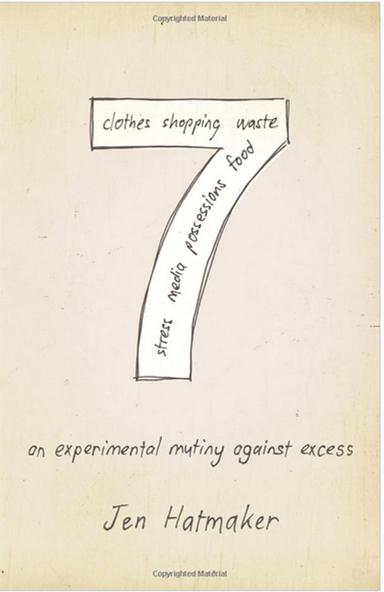
Acabo de leer “7”, y este libro hizo esto en mi vida.

Jen Hatmaker escribió su muy honesto, provocador y divertido libro como un diario de sus siete meses en los que consideró y cambió su estilo de vida normal. Cambió temporalmente su rutina de comodidad y excesos por siete meses de reducción, sacrificio y la tensión constante que conlleva estar consciente de la realidad. Cada uno de sus desafíos mensuales me provocó cuestionar mi vida y reflexionar en las “mentiras” que me digo a mí misma:

1. Tengo hambre.

Jen eligió comer solamente siete alimentos por todo un mes… sin condimentos, sin totopos y salsa, sin postres… ¡¡sin café!!

Aunque he implementado un “cambio de estilo de vida” para comer saludable, rara vez como porque de verdad tengo hambre. En vez de eso, como por todas las razones equivocadas – como cuando estoy aburrida, cuando estoy estresada y porque otros están comiendo. Como demasiado y como comida que no es buena para mí. “7” me animó a tomar mejores decisiones alimenticias. Mucha gente ni siquiera tiene comida que comer todos los días. Tengo muchas opciones; no quiero abusar de esa bendición.

2. No tengo nada que ponerme.

Jen se puso las mismas siete piezas de ropa por un mes. También regaló la ropa que no necesitaba. Jen escribió, “Esta ropa bonita me dio confianza cuando estaba aterrorizada e insegura”. También, “La ropa me definía cuando mi verdadera identidad era confusa.”¹

Cuando digo que no tengo nada que ponerme, el problema usualmente no son los jeans apretados, las blusas pasadas de moda o las chamarras de la temporada pasada. La batalla es frecuentemente interna más que externa. Tengo demasiadas opciones… pero todavía no he encontrado la cosa que me hace sentir segura, capaz y atractiva. Este libro me ha desafiado en enfocarme más en fortalecer mi carácter y menos en llenar mi closet.

3. Necesito eso.

Jen regaló siete artículos cada día. (La ropa contaba como un sólo artículo porque la ropa que ya no les queda a los niños y la que los adultos no usan  acumula rápida y fácilmente.)

Cuando hicimos la “purga” para nuestra mudanza, me di cuenta de que soy una consumidora “por si acaso”. Compro para cada posible situación, para casa visita futura, para cada proyecto potencial. Montones, cajas y colecciones prueban mi obsesión. “7” me recordó que “La madurez diferencia la necesidad del deseo, la sabiduría de la  estupidez. Crecer significa frenar los apetitos…”² Necesito madurar.

4. Tengo que checar mi Facebook.

El cuarto mes fue ayunar siete medios de comunicación (excepto para algunos usos necesarios). No Facebook, Twitter, blogs, Pinterest, TV, video juegos ni YouTube. Los Hatmaker encontraron tiempo para leer libros, caminar, cocinar juntos y hacer manualidades y proyectos.

La vida continúa… aún si no checo mi Facebook todos los días. Cuando digo que no tengo tiempo para las  actividades importantes o  que son buenas para mí, la verdad es que, sí, tengo el tiempo… sólo que lo uso para otras cosas. Ahora tengo la convicción de controlar el tiempo que paso en los medios y no dejar que me controle a mí.

5. Reciclar cuesta mucho trabajo.

Jen y su familia implementaron siete hábitos para una vida más verde durante la semana cinco: jardinería, composta, conservación, reciclar, usar sólo un auto, comprar usado y consumir cosas locales.

Jen escribió, “Si estuvieramos conscientes de lo sagrado de la creación, sospecho que alteraría la forma en la que la tratamos.” ³ A pesar de los argumentos ecológicos, sé que hay muchas maneras en las que puedo cuidar del planeta. Va a costar más disciplina que sacrificio, más actitud que esfuerzo. Quiero ser una buena administradora.

 6. No puedo ahorrar.

Escoger comprar en solamente siete lugares fue el desafío del sexto mes.

Moderar lo que gastamos y direccionar nuestros ahorros para alguien más va contra nuestra cultura. Personalmente hago pocas compras grandes, pero puedo “centavear” un presupuesto hasta morir. Muchas veces mis gastos se ligan a socializar, pero el consumismo no iguala a la comunidad o la conexión. Con pequeños ajustes, puedo ser más creativa en mi hospitalidad y más generosa para dar a otros.

7. No tengo tiempo de descansar.

Jen dice que éste fue el mes más difícil para ella, combatir el estrés con siete pausas en el día y un sabático cada semana.

Estar ocupado es poderoso. Hay distracciones, tentaciones y necesidades por todas partes. Por otro lado, descansar es esencial para continuar enfocado, tener energía y salud. Escribí un post anterior acerca de algunas de las maneras para intentar descansar.

Jen hace muy buenas preguntas en el libro que ahora me estoy preguntando… ¿Qué me da valor e identidad? ¿En qué lucho por aprobación, apariencia, reconocimiento, control? ¿Estoy consciente de mi abundancia y me preocupan las necesidades de los demás?

Haré cambios en mi vida a causa de este libro y viviré con mayor tensión, constantemente evaluando mis decisiones y creencias.

¿Te dices mentiras a ti mismo? ¿Cómo buscas la verdad? 

_______________

¹ Hatmaker, Jen (2011-12-19). 7: An Experimental Mutiny Against Excess (p. 72). B&H Publishing Group. Kindle Edition.

² ibid (p. 94)

³ ibid (p. 136)

am I lying to myself?

Have you ever read a book that shakes your world? Causes you to re-consider your values, priorities and way of life? Convicts, encourages and motivates you to change?

I just read “7“, and the book did just that in my life.

Jen Hatmaker wrote the honest, funny, thought-provoking book “7” as a diary of her seven months of considering and changing her normal life style. She temporarily exchanged her routine comfort and excess for seven months of reduction, sacrifice and the constant tension that awareness of reality brings. Each of her monthly challenges caused me to question my life and reflect on the “lies” I tell myself:

1. I’m hungry.

Jen chose to eat just seven foods for a whole month… no condiments, no chips and salsa, no desserts… no coffee!!

Although I have implemented a “life-style change” of healthier eating, I still rarely eat because I am actually hungry. Instead I eat for all the wrong reasons – I eat when I am bored, when I’m stressed, and because others are eating. I eat too much, and I eat foods that are not good for me. “7” encouraged me to make better dietary choices. Many people do not even have food to eat each day. I have so many options; I don’t want to abuse that blessing.

2. I have nothing to wear.

Jen wore the same seven items of clothing for a month. She also gave away unnecessary clothes. Jen writes, “These pretty clothes gave me confidence when I was terrified and uncertain.” Also, “Clothes used to define me when my genuine identity was fuzzy.”¹

When I say I have nothing to wear, the problem is usually not too-tight jeans, out-of-style shirts or other-season jackets. The struggle is often internal rather than external. I have way too many choices… I just haven’t found that something to make me feel secure, capable, and attractive. This book has challenged me to focus more on strengthening my character and less on filling my closet.

3. I need that.

Jen gave away seven items every day. (Clothing counted as only one item, since children’s outgrown and adults’ never-worn added up too quickly and easily.)

When we did our own moving purge, I realized that I am a “just in case” consumer. I buy for every possible scenario, every future guest, every potential project. Piles, storage boxes, and collections prove my obsession. “7” has reminded me that “Maturity deciphers need from want, wisdom from foolishness. Growing up means curbing appetites…”² I need to grow up.

4. Gotta check Facebook.

Month four was a seven media fast (except for a few necessary uses). No Facebook, Twitter, blogs, Pinterest, TV, video games, or YouTube. The Hatmakers found time for books, walks, cooking together, crafts and projects.

Life will go on… even if I don’t check Facebook each day. When I say I don’t have time for important, good-for-me activities, the truth is that I have the time… I just spend it elsewhere. I am convicted to control my media time and not allow it to control me.

5. Recycling is too much work.

Jen and her family implemented seven habits for a greener life during week five: gardening, composting, conserving, recycling, driving one car, shopping thrift, and buying local.

Jen wrote, “If we acknowledged the sacredness of creation, I suspect it would alter the way we treated it.”4 Irregardless of ecological arguments, I know there are many ways that I can better care for the earth. It will take more discipline than sacrifice, more attitude than effort. I want to be a good steward.

  6. I can’t afford to save.

Choosing to shop at only seven places was the 6th month challenge.

Moderating spending and re-directing savings to others is very counter-cultural. Personally I make few large purchases, but I can nickle and dime a budget to death. Many times my spending is linked to socializing, but consumerism does not equal community or connection. With a little adjustment, I can be more creative with my hospitality and more generous with my giving.

7. I don’t have time to rest.

Jen claims this was her most difficult month, combating stress with seven pauses each day and a Sabbath day each week.

Busyness is powerful. There are distractions, temptations and needs everywhere. On the other hand, rest is essential for continued focus, energy and health. I wrote a prior post about some of the ways I try to rest.

Jen asks very good questions in the book, and I am now asking… What gives me my value and identity? Where do I struggle with approval, appearance, recognition, control? Am I aware of my abundance and concerned about other’s needs?

I will make changes in my life because of this book, and I will live with greater tension, constantly evaluating my beliefs and choices.

Do you tell yourself lies? How do you search for truth? 

_______________

¹ Hatmaker, Jen (2011-12-19). 7: An Experimental Mutiny Against Excess (p. 72). B&H Publishing Group. Kindle Edition.

² ibid (p. 94)

³ ibid (p. 136)

a rhythm of rest

I just returned from a few sweet vacation days with my family… a rustic cabin by a high altitude river, trail runs under the pine trees, fly fishing, campfires, reading, game nights, puzzles… and too much delicious food.

No cell phones. No TV. No internet.

Just lots of inside jokes and side-splitting belly laughs… very relaxing. Very refreshing.

Our special time reminded me how important rest is in our lives… a time to pull back and think about nothing… or reflect and talk deeply… whichever is desired and needed at the time.  Sometimes I don’t even know what I need until I’ve been away from the busyness and distractions for a while.

A wise friend once shared a recipe for rest that – when I choose to apply it – helps me to ensure that I am resting… even as part of a very busy life. It might help you too…

REST daily

Even 30 quiet minutes a day to get away from the to-do list and everyday chores gives me perspective and energy for the day. I like to set aside time in the early a.m. to read from my Bible and/or a devotional book and pray for guidance and direction for the day. This gets me started on the right track. Others find time to exercise or add a nap to each day.

REFRESH weekly

This is one “Sabbath” day per week that is a change of pace or a break from the week’s schedule and routine. For many this is a church and worship day. For me, this day can include reading, a longer run, working in the garden, fun with friends, sports or anything that makes the day feel special and refreshes me for the next week. I try to stay away from my job, blog postings, or M.A. homework… a break from anything that feels like “work” to me.

REFLECT monthly

For years we have scheduled a whole day or a weekend to review goals, evaluate progress, and plan personal, family and/or ministry activities. This has been a great time to check on personal development plans (PDP), yearly resolutions, children’s character building, and any life-change challenges in process. I like to go away to a favorite coffee shop with my husband, and we have also enjoyed a park setting, a library, a nice hotel, or a retreat center. We take along calendars, podcasts, PDPs, and other resources for our time away.

RETREAT yearly 

This is the longed-for extended vacation, get-away, or escape! For me, it usually involves a complete geographical change and a total disconnect from usual responsibilities and everything virtual or social media related. I love when it includes time with my family, staying up late and sleeping in. These are the treasured times when traditions strengthen, memories multiply, and dreams take flight.

Life flows with a rhythm of activity and rest. I often have to battle prideful, self-made, artificial arguments that claim I am too busy to rest. I need to remind myself that I am not too important nor too indispensable to step aside for a while. I am healthier, more energized, more peaceful – and more pleasant to others – when I rest regularly as part of my life rhythm.

I’d love to learn from you… How do you rest?