broken hearts

free image courtesy of FreeDigitalPhotos.net

One of my children broke my heart the other day. They made a poor choice that really disappointed me. I hurt for them and for the other people involved.

That was not the first time I hurt for one of my very normal, very imperfect children… and I am sure it won’t be the last time.

I’m confident that my children often have no idea how their choices and actions affect me as their mom. They certainly pay the major part the actual physical, emotional, and financial consequences, but there is a ripple effect from all they do.

As a parent, I carry part of their experience with me. I grieve the unfulfilled dreams and hopes I had for them. My heart aches for their loss. I cry for their pain. I pray for further growth and maturity. My soul yearns for their forgiveness and healing.

GRACE

I have learned through my own mistakes over the years that grace is a precious gift to receive during times of pain. My children are usually completely aware of their error; they don’t need judgement, criticism or lectures. They do need to know that – whatever happens – I love them still.

CHOICES

I need grace too. I could beat myself up with self-doubts, guilt and second-guessing. Was there a lack in my parenting that somehow “caused” this? Did I not hug, teach or discipline enough? Although I already know that my parenting is not perfect, it was helpful when a friend reminded me that even God – the perfect Father – has imperfect, mistake-ridden, continually erring children. Our situations are very rarely simple cause and effect. Each one makes their own choices.

NEED

In the midst of the ups and downs of life, my (almost adult) children need me. Some times they need someone to listen; other times then need a long, strong hug. Some times they need practical help; some times they need me to “just” pray and give them time and space to work things out. Some times they need advice, counsel and the encouragement to reconcile, restore and choose better the next time.

…because there will be a next time. I would do almost anything to protect my children from pain. When they were very little, I could fool myself occasionally into thinking that I could control their environment and choices. I know better now.

The question is not IF my children will avoid poor choices and pain. Instead WHEN they are hurt and hurt others, the question is HOW will I respond?

_____________

How do you respond to your children’s (or others’) poor choices? What helps you respond well?
better now than later!

photo credit: US National Archives’ Photostream

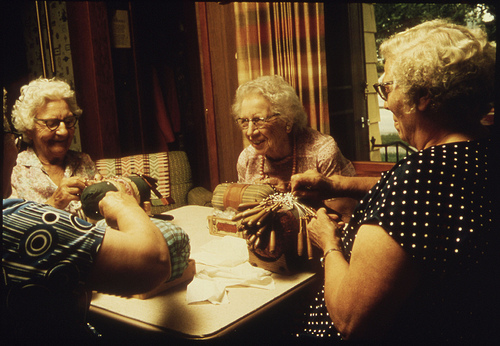
My parents are getting older. I haven’t been around to watch it happen little by little each day, but with each visit I experience time’s passing more dramatically. A few days ago, I was able to spend some extended time with my dad… He can’t get around like he could before. He forgets things and is easily confused. He doesn’t hear well. He needs help with simple tasks.

It is hard for me to watch him struggle. I am sure it is hard for him to have to struggle. He was a strong, independent, military man in his younger years; he does not like to have to depend on anyone.

I have to admit that his deteriorated health and weakened condition scared me a bit… I am like my father in many ways. I have always been energetic and strong, and I do not like to need other people to help me. I have always had a quick mind and the ability to accomplish my dreams and goals by working hard. I felt anxious and fearful thinking about how old age will affect me in the future.

Beyond the physical challenges, some of the hardest things for me during the visit with my dad were his words. He was critical and accusing with irrational, belittling comments. I could excuse some of his behavior as a result of his encroaching senility, but the truth is… this was not something new. I remember that, even when he was younger, he used to blame others for something he had misplaced or for an error he had made.

I don’t really consider myself “old”… yet!  But this visit with my father has challenged me to consider my own words and actions today. Nancy Ortberg, in her book Unleashing the Power of Rubber Bands, says, “…people who resist change and hold on to the old ways when they are in their twenties become people who resist change and hold on to old ways when they are older. People who embrace change and gravitate toward new ideas in their twenties become people who embrace change and gravitate toward new ideas when they are older.”

I have also heard that as we get older, our negative character traits will not diminish but become even more pronounced. If my character traits and behaviors of today will magnify when I am older… what will I be like?

I came up with some questions to consider now… How do I react to illness and physical challenge? How do I use my time, especially when my energy is low? How do I handle limitations and the need for help from others? Do I blame others for my mistakes? How do I react to change and new ideas? What can I work on today… so that I enter “old age” gracefully?

~~~~~~~~~~

What do you think about preparing now for “old age”?

how to encourage others

I love to receive encouragement of all kinds, don’t you? Encouragement comes in many forms: a thank you note, positive words, a tip that moves my idea forward, a hug, a smile…

In an earlier post I compared motivation and encouragement. As part of the research for that post, I asked some of the incredible ladies I worked with to answer the questions: What makes you feel motivated? What encourages you?

I so appreciate their honest feedback. They mentioned things I do well and areas where I can improve. I took the liberty to group their answers into general categories that help me remember the ideas. I learned a lot from what they shared; I think you will also!

Demonstrate Interest

    • A genuine interest about what is happening in life
    • A genuine desire to understand – ideas/thoughts
    • Listening
    • Quality time together one-on-one working on character issues
    • Confrontation/correction done in love
    • Grace extended rather than judgement for mistakes/errors

Believe

    • Help with specific areas of need: organization, personal discipline
    • Encouragement to develop potential in new areas
    • Belief in, promotion of, resources for visions/dreams/projects

Express Appreciation

    • Receiving words of affirmation, “please” and “thank you”
    • Personalized and informed recognition given for a job well done, effort expended, and/or talents
    • Sincere appreciation/value/importance expressed (spoken, note, email) for work
    • The opportunity to see specific/useful results and impact from efforts
    • Recognition of growth/progress in personal/professional areas

Add Personal Touch

    • Vulnerability on the part of the supervisor
    • A hug or pat on the back
    • Small personalized gifts – coffee, coke zero, chocolate 🙂
    • Prayers

I am very grateful for the encouragement I have received from others when I needed it. I want to get better at encouraging others. This list gives me lots of ideas… I am sure I can find something here that I can use each day to encourage someone.

What would you add to this list? What encourages you?

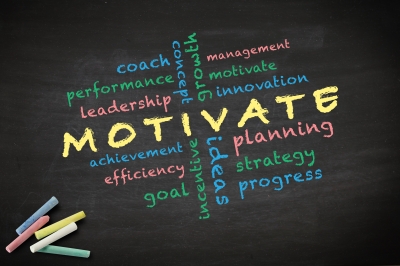
motivation and encouragement

photo courtesy of FreeDigitalPhotos.net

I really enjoy mentoring young leaders.Others have told me that I am an encourager, and after many years, I think I finally believe that is true. For that reason, when I came out low in “motivation” in a recent 360 evaluation, I took that feedback soberly and began to ask questions and do some research.

I originally thought the two actions were similar and wondered how could I be good at one and weak at the other? When I compared the definitions between encourage and motivate, I realized there are some key differences.

Various dictionaries define the two words this way:

Encourage – 1: to inspire with courage, confidence, or hope, 2: to stimulate, spur on, 3: to give help or support. Synonyms are: inspirit, hearten, or embolden – the idea being to fill with courage or strength of purpose, or to raise one’s confidence especially by an external agency.

Motivate – 1: to provide with a motive, 2: to give incentive to; move to action; impel. Motivation = a motivating force, stimulus, or influence

I checked the Bible also, and there are very few references to motivate or motivation – most references warn against wrong or evil motives. Encouragement, on the other hand, appears at least 35 times – often associated with strengthen and perseverance during action already in process.

www.PsychologyToday.com says that, “Motivation is literally the desire to do things. It’s the difference between waking up before dawn to pound the pavement and lazing around the house all day. It’s the crucial element in setting and attaining goals—and research shows you can influence your own levels of motivation and self-control….”

Frederick Herzberg’s Two-Factor Theory, (intrinsic/extrinsic motivation), suggests that the factors that motivate people can change over their lifetime, but respect as a person is one of the top motivating factors at any stage of life.

I recognize that I am basically a self-motivated person. I wake up in the morning with motive, incentive, purpose.I don’t need someone else to move me to action… I am already ready to go! As the day goes on, however, I can get discouraged, worn out, or tired by the struggles, conflicts, and challenges that battle against my goals and desires.

That is when I really appreciate encouragement from others… a bit of “You can do it!” or “I believe in you” keeps me moving forward..

When someone has a vision, dream or calling, I love to encourage them… letting them know I believe in them, cheering them on when they are battle-weary, and looking for ways to provide resources to help them.

I realize that I am weak when others lack desire, vision and motivation. If they don’t already have a goal, something they want to accomplish, or a purpose for action, then I feel at a loss for how to help them.

From my study so far I have learned that I can improve my ability to motivate by communicating and imparting vision better and more often. I can also ask others what motivates them and learn about incentives and reasons for action. I can work to treat people with respect. Maybe one of the most important things I can do is to pray for the person. Motivation is going to grow from within… and it is God who is best at changing the heart.

Do you like to motivate or encourage others, or maybe both? How do you do that?

zoning out

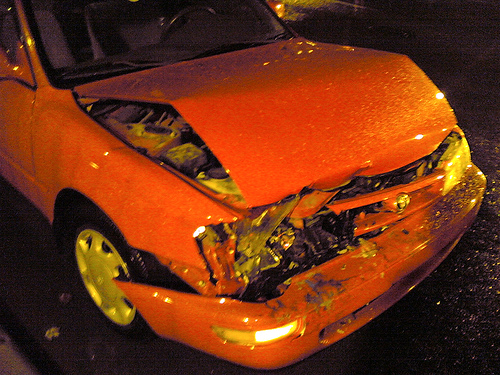
My husband almost got into a car accident the other day. He mentioned that when we lived in Mexico, he was always alert, on-guard, and cautious when driving because it was more common for people to do something unexpected on the road. On the other hand, here in the States, since he (mistakenly) assumed that driving would be dull and drivers would go by the rules, he was paying less attention and was almost t-boned by someone. He is reminding himself that he needs to drive aware at all times and ready for the unexpected, no matter where he is driving.

Isn’t much of life that way? When I assume that life will be routine and “go by the rules”, I am greatly shaken by surprises that I did not see coming. When I (mistakenly) expect health to be automatic, relationships to escape conflict, or work to lack challenge, I “zone out”, reality blindsides me, and I get into “accidents”. I get frustrated by sick days, resentful of differing opinions, and irritated by obstacles that block my goals.

On the other hand, if I recognize that every day of my life is full of challenge, never ordinary, and never monotonous, then I will be on the offensive, prepared, and continually engaged with my surroundings. I will expect the un-expected and make the extra effort to ensure that each day I am physically, emotionally, intellectually and spiritually ready for whatever might come my way. I will not shocked by the interruptions, disputes, and barriers, but rather I will be constantly watchful and in training for any upcoming test. I will make sure I have done the preparation necessary – eaten well, rested, prayed, studied – for each day…

I don’t want to “zone out” as I go through my life. I want to be attentive, observant, considerate, and ready to act… prepared, able, and willing to respond. I’d like to avoid as many accidents as possible!

How do you stay out of the “zone”? How do you make sure you are ready for life’s challenges?

a Father’s Day reflection

(**I now celebrate Father’s Day without my dad. He died on August 17, 2018. I’m missing him today.)

Celebrating Father’s Day is kind of a “mixed bag” for me.

I had a good dad growing up… can’t say a great dad… but a good dad. Unlike many others, he was physically present in our home – a powerful presence. He was an Air Force helicopter pilot: authoritative, argumentative, and alcoholic. We drilled the states’ capitals at dinner, stood at attention for room inspections, and felt guilty if he found us watching TV during the day instead of pulling weeds in the yard.

I have a strong work ethic, a tendency to criticize, and a strong character because of my Dad. I am thankful that he also gave me a desire for physical fitness, a love for travel and the outdoors, an appreciation for classical music, and the ability to believe in myself. He often said, “If you want it done right, you have to do it yourself.” When I asked his opinion regarding a few key life decisions, he said, “I wouldn’t ever do that, but that doesn’t mean that you shouldn’t.”

My Dad did not build many deep relationships – contributing to my parents’ divorce after 25 years. He has rarely shared dreams, concerns, or any deep emotions with others. I don’t believe he understands a personal faith with God, and I think that causes him fear about dying. His health is deteriorating, compounded by the effects of a life-long alcohol addiction.

When Father’s Day comes along, I choose to honor him for all the good he brought into my life… and I choose to forgive him for the non-existent affection and communication that I longed for in our relationship. I thank him for loving me and supporting me in his own way, and I release him from the unmet wishes that he be sober, neat, and without favoritism.

I am very grateful for the ability to build on my past – but not be enslaved to it. My husband and I leaned heavily on the hope that we would create a different kind of home and family than I grew up in… including the good, but adding new elements of our own choosing as well. I know some of you had much more difficult experiences with your fathers… or never really knew them. Others had great Dads. Our families are part of us… but they are no excuse for poor habits or choices… or lack of forgiveness – there is always hope because of a perfect heavenly Father who can help us move forward and create a better future.

So, Happy Father’s Day, Dad. I love you as you are. I am praying for you. 

What was your Dad like? How do you celebrate Father’s Day?

___________________________

**I recommend Leslie Leyland Fields’ post and book to you if you are attempting to love or forgive an imperfect father.

how much is enough?

I’ve been back in the US for about a week now. At times I have felt at home; other times I can’t help noticing the differences and feeling like an alien in a strange land. So many things here are bigger, cleaner, more organized and more modern. Streets are smooth, aisles are wide, packing spaces are huge.

On the other hand, people seem busier. They “eat and run”. They are constantly connected to their technology – even in the middle of our conversation. I have to remind myself that is normal behavior here and not get offended. People have SO MUCH STUFF, but they talk about always wanting more. My mind wanders to the memories of children without shoes, one room homes without indoor plumbing, adults who don’t know how to read…

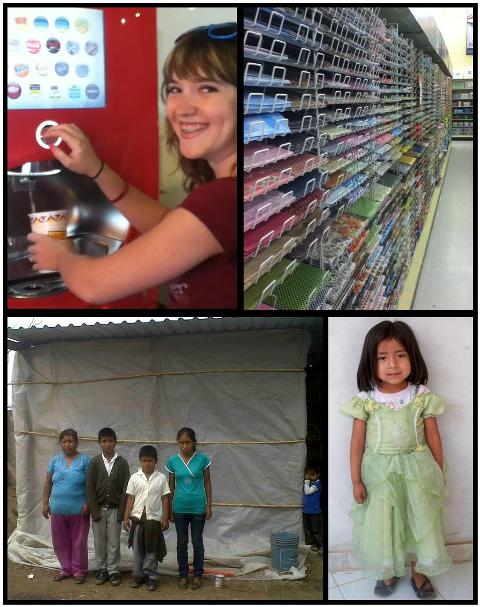
A few times I have been literally overwhelmed by the number of options available. Shopping at Walmart with my sister caused me a few “I’m freaking out!” moments. Rows and rows of cereal, cheese, coffee and bread varieties. I stood completely jaw-dropped in front of the ice cream doors… how do you ever decide? How many kinds of ice cream can there be?

My next shock came as we filled our cups at a new touch screen self-serve soft drink machine. There were about 16 first options on the screen: Coke, Pepsi, Danzini water, Powerade, Rootbear, Sprite, Lemonade, etc. … but each of those choices led to a second screen with five to eight additional options: cherry, orange, vanilla, raspberry, lime, cherry vanilla, caffeine free and more!! … and of course, you could mix drinks if you wanted… a practically infinite number of combinations! How many different drinks could people want?

Anther day we visited a craft store. Thanksgiving and Christmas decorations are already available… next to the red, white and blue for the 4th of July. Innumerable candles, baskets, ribbons, silk flowers filled my vision. The scrap-booking aisles took my breath away… so many stickers, papers, buttons, and miniature decorations!! How many paper options can a person need?

It seems I keep asking myself, how much is enough? Ask my husband, I tend to really like options. I don’t believe nice, decorative things are bad… even God created many beautiful parts of creation that don’t have a defined useful value… they are just pretty and display His glory. I don’t believe it is somehow more inspirational to live poor. I think many of these options I am experiencing demonstrate incredible creativity, ingenuity and a desire to make things better and meet people’s needs. But, sometimes there are obvious gluttony, selfishness, and entitlement attitudes present…. I don’t have an answer, but I am asking the question.

What do you think? How do you know… How much is enough?

¡dímelo a la cara!

Fui a agarrar mi taza de café favorita esta mañana y la agarradera se sintió extraña, como si estuviera “gruesa”, pegajosa o que no la limpiaron bien. Casi sin pensar la tallé por un segundo y claramente se hizo evidente que fue más que una mala lavada.  Observé con más cuidado (difícil de hacer ya que seguía esperando tomar mi primera taza de café de la mañana), y se volvió obvio que la agarradera era fragmentos pegados juntos.  😦 Alguien había roto la agarradera de la taza, y decidió no decirme, y en lugar de eso pegó la evidencia – Supongo que ¿con la esperanza de que yo no me diera cuenta? ¡Sí seguro! (mis amigos saben que tengo un poco de fetichismo con las tazas…)

Esta situación me recordó a una pregunta “rompe-hielo” que escuché una vez… si estuvieras en casa de un amigo y el baño se tapara después de que lo usaste, ¿le dirías al anfitrión/anfitriona o tratarías de escabullirte sin ser observado y no pasar por la vergüenza de admitir el hecho… y pedir ayuda?

¡Me sorprendió mucho cuánta gente respondió que estaría muy avergonzada como para decir la verdad! Como dueña de casa con el don de la hospitalidad quien tiene MUCHA gente en su casa TODO el tiempo… déjame decirte ¡¡QUIERO SABER si mi baño no está funcionando!! Quiero poder arreglarlo y no quiero que el problema se haga peor con el tiempo (no necesito dar más detalles ¿verdad?).

También QUIERO saber si alguien rompió mi taza… no porque realmente me importe; solamente preferiría en gran manera saber que ser sorprendida por el hecho cuando busco mi taza en la mañana toda adormilada.

Me doy cuenta de que para animar a otros a decir la verdad, necesito responder correctamente cuando lo hacen… y es mucho más fácil responder bien a una taza rota o a un baño que no funciona, que responder bien a una falla de carácter o a una opinión contraria o a una decadente evaluación de desempeño. Es mi responsabilidad invitar agresivamente una retroalimentación veraz y considerar apropiadamente lo que me están diciendo… Esto no siempre es fácil y quiero crecer en ésta área. Mi reacción a la verdad afectará grandemente si la gente va a responder y decirme la verdad cuando la pido.

Ayuda me a aprender más… ¿Prefieres escuchar la verdad? ¿Qué te ayuda a responder bien cuando alguien “te lo dice a la cara”? 

got the gratitude attitude?

I’ve been amazed the last few days by great contrasts in gratitude displayed.

In one instance, a fellow missionary friend received various favors and helps, but made only negative, complaining comments.

In another situation, a young lady, on her own initiative, said “thank you” various times, in the middle of a very busy schedule, to the people who had done something nice for her.

In both cases, the actions were so noticeable that a third-party, impressed by the behavior, came to tell me about it. Unfortunately, one was very encouraged, but the other felt frustrated and disappointed.

I’ve had people rationalize their lack of thankfulness with, “We don’t thank people for something when they are only doing their job” or “I’m not detail oriented. I don’t write notes”. They haven’t convinced me. In my opinion, these are just excuses for a lack of gratitude and an unwillingness to make the effort.

There are many ways to express gratitude. When I was little, my Mom taught me to write thank you notes for gifts or special treats. We taught our children to do the same. We also taught them to say “grace” before a meal, to “try a bite” to show gratitude for the food offered, and to say thank you to the cook before leaving the table. Living in a foreign country, we saw many examples of poverty and need, and our children learned gratitude for all they had. On teams, we say thank you in many ways (diplomas, gifts, financial and “day off” compensations).

Sometimes it takes extra time, effort, or even expense to say thank you; it is a habit we learn and can improve mostly it just takes a sincere attitude of  gratitude. I know I can grow in my gratitude attitude… the picture I added to this blog has been going around on Facebook and Pinterest and challenges me greatly.

I can also learn from you…  How is your gratitude attitude? How do you say thank you?