bitter is not better

dark chocBitter may be OK for dark chocolate, herbs, or ales, but it is not good for people.

Bitterness is so ugly.
Amy Heckerling

The last few weeks, I heard numerous times about the need to fight against becoming a bitter person. I’m not sure if people were seeing the tendency in me, but I have decided to take the counsel seriously. We all have the ability to become bitter people; life is hard, but we choose how we will respond to the hits that life brings our way.

We start out life very naive and optimistic. We believe that we can do anything if we work hard enough, and we live our days with a (false) sense of immortality and invincibility. We erroneously think we can easily choose our career path, change our spouse, and control our children.

Somewhere between 30-50 years old, we discover that life did not turn out like we thought it would. Individuals and families struggle with terminal illness, unemployment, prodigal children, tragic accidents, incurable medical disorders, loved one’s early deaths, long-term singleness, separation and divorce… unexpected, unplanned, and unavoidable chips to our perfectly manicured world. We get hurt in relationships that cause conflict, under-appreciate and undervalue our work, misunderstand and overlook our contributions. Life is hard – really hard.

It is a simple but sometimes forgotten truth
that the greatest enemy
to present joy and high hopes
is the cultivation of retrospective bitterness.

Robert Menzies

If we focus on negative circumstances, compare our life with others’, or refuse to forgive wrongs, we harden our heart and pave a path toward bitterness. We find ourselves critical, complaining, angry and discouraged with life. It is natural and easy to do.

On the other hand, if we practice gratitude, contentment, and peace with others – even during the hard times – we can pass through our struggles singed by real life, but not burned and destroyed. The pain is real, but it does not have to define us.

Bitterness imprisons life; love releases it.
Bitterness paralyzes life; love empowers it.
Bitterness sours life; love sweetens it.
Bitterness sickens life; love heals it.
Bitterness blinds life; love anoints its eyes.

Harry Emerson Fosdick

I do not want bitterness to control my life. I am praying and asking others to help me process the hard experiences in my life so that I respond with love instead.

How do you fight bitterness? Do you need to ask someone for help?
St Patrick – an example of forgiveness

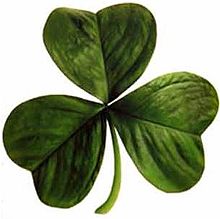
shamrockI’m not great at forgiving. I usually need time to let the pain or anger dissipate before I am willing to re-connect with the person that hurt me. Sometimes I struggle with reappearing memories of the wrongs done, or I want to talk badly about the other person(s).  It takes even longer for me to want to do good for that person. St. Patrick is a good example for me. Little is known of Patrick’s early life, though it is known that he was born in Roman Britain in the fourth century, into a wealthy Romano-British family. His father was a deacon and his grandfather was a priest in the Christian church.

At the age of sixteen, Irish raiders attacked his family’s estate, kidnapped him and took him captive to Ireland as a slave. He was held somewhere on the west coast of Ireland, possibly Mayo, but the exact location is not known. It is believed that he worked as a shepherd, and that he turned to his religion for solace, becoming a devote Christian. Six years later, according to his confession, God told him in a dream to flee from captivity to the coast, where he would board a ship and return to Britain. Upon returning, he joined the Church in Auxerre in Gaul and studied for years to enter the priesthood.

If I have any worth, it is to live my life for God
so as to teach these peoples;
even though some of them still look down on me.
Saint Patrick

In 432, he claimed that God called him back to Ireland, now as a bishop, to share God’s love with the Irish people – returning with a gift of good news to the country that had wronged him. Irish folklore tells that one of his teaching methods included using the shamrock to explain the Christian doctrine of the Trinity to the Irish people. After nearly 30 years of serving the Irish people, he died on the March 17, 461, and according to tradition, was buried at Downpatrick.

Although there were other more successful missions to Ireland from Rome, Patrick endured as the principal champion of Irish Christianity, is held in esteem in the Irish Church, and his life and ministry are still celebrated today.

An amazing legacy… because he did not hold a grudge against a people… because he didn’t focus on the wrongs done but was willing to forgive and do good. I can learn a lot from St. Patrick.

Do you ever struggle with forgiveness? What helps you forgive?

_______

http://www.history.com/topics/who-was-saint-patrick
http://en.wikipedia.org/wiki/Saint_Patrick
http://www.biography.com/people/st-patrick-9434729?page=1

a promise is a promise

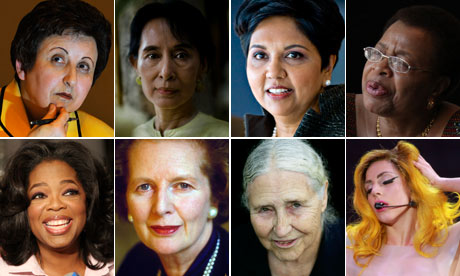
IWD logo 2013

A Promise is a Promise: Time for Action to End Violence Against Women

This is the theme for the March 8th, 2013, International Women’s Day activities around the world.

Although great progress has been made through the years since the 1900’s beginning of this celebration, there is still so much to be done. In some places, equitable opportunities exist for women in education, employment, access to resources and benefits, but shamefully, in other parts of our globe, women are still treated like property, abuse and violence are common, and options are excessively restricted. This needs to change.

“There is one universal truth,
applicable to all countries, cultures and communities:
violence against women is never acceptable,
never excusable, never tolerable.”

Secretary-General Ban Ki-moon

Here are some websites that you can visit to begin to learn more about the history of the day, the issues facing women presently, and how you can get involved to support and encourage the women in your life… as well as value and protect all women around our world.

YOU can make a difference. Think globally and act locally…

http://www.internationalwomensday.com/

http://www.un.org/en/events/womensday/

http://www.guardian.co.uk/world/international-womens-day

What will you do to help end violence against women?

how to know yourself better

reflection morguefile webDo you like homework? Neither do I… usually.

However, this fall I had to do a homework assignment for our Global Leadership MA class that I want to recommend to you. It was, by far, the most encouraging homework assignment I have ever done. The exercise is called “Your Reflected Best Self” (RBS), and it is fully described in the Harvard Business Review article, “How to Play to Your Strengths” from January 2005.

The exercise is not designed to build your ego, although it might do that. A while back I wrote about how we often receive six comments of negative feedback to one positive. The RBS is a systematic tool that balances out that ratio by discovering or confirming strengths and potential. With some analysis and application (done best with the help of a coach), you can use the information gained to develop a plan to maximize your talents at work and in other areas of life.

It works like this:

Step 1: identify a variety of people to give you feedback

Chose 10 to 20 people – family, past and present co-workers and bosses, friends, etc. Send them an email like this…

Dear XXXX,

As part of my personal development program, I am constructing a profile of the ways that I add value and contribute. I am contacting twenty people who know me well from a variety of relationships: family, friends, co-workers. I am requesting that each person provide me with three stories of when I was at my best and my strengths were meaningful to them in some way. I would like to invite you to help me with this exercise.

I appreciate you taking time to do this for me. Please provide specific examples so I can understand the situation and the characteristics you are describing. One short paragraph will be fine.

1. One of the ways that you add value and contribution is: _______

For example….

2. Another way that you add value and contribution is: _______

For example…

3. One last way that you add value and contribution is: _______

For example…..

Please email your responses to me by XXXXX.

Thanks so much for your help!

Step 2: observe patterns from the responses received

Enjoy reading the email responses! A good way to see the common themes is to create a chart. It might look something like this…

Common Theme

Examples Given

Possible Interpretation

Ethics 1. I stood up to a peer who was crossing the line of ethical behavior. 

2.

I am not afraid to choose right over wrong.
Team Builder 1. I coached our softball team. 

2. I created a work group for a big project. 

3.

I thrive working with others.

Step 3: write a personal profile and compare it with your day-to-day life

After you summarize the feedback, you will know yourself better and the tasks, atmosphere, and relationships that energize you and facilitate your strengths. You can then evaluate where and how often you get to use your talents. Those are likely the times, projects, and situations where you are most encouraged and most productive. If you are not using your best self very often, you can understand why you feel tired and discouraged.

Step 4: redesign your job 🙂

It is not always possible to redesign your whole job, but sometimes there is freedom to make a few key adjustments. We can also make changes at home to allow more time for the people and the tasks that bring out the best in us. This is when coaching is helpful – to think through where to make the changes… and help us actually follow through.

I learned a lot about myself by doing this exercise; I hope you will too. If you decide to try it, please let me know what you find out about your Best Reflected Self!

I don’t like being sick

pillsI don’t like being sick.

I don’t like feeling weak or low energy or dependent on others. I don’t like to limit who I can see or where I can go or what I can do. I don’t like taking pills, and I avoid doctors and hospitals as much as possible. Most of my life I have been strong and healthy, so when I get sick, I usually try to just ignore it, or work through it, or get over it as fast as I can.

If I can’t do that, I tend to mope and complain, and generally act as a whiny, negative, grumpy patient.

I feel sorry for those who have to live around me or care for me.

(…and worse, I’m not much better caring for others. Let’s just say that mercy and compassion don’t come out very high on my strengths lists!) Ask my family!

However, as I thought about it this weekend, laying in bed, unable to do much else, I realized that over the years being sick has been useful in my life.

Being sick teaches me empathy for others who are ill, sometimes chronically or seriously. I have experienced – maybe just a little – of the pain, limitations, and frustrations that they have. I am less likely to criticize or judge because I can relate to what they are going through.

Being sick reminds me that rest is good occasionally – not lazy, coach potato, bring-me-a-beer-honey, all-the-time-rest, but  regular, reflective, restorative, away-from-the-routine, Sabbath-kind of rest… A few minutes a day, a day per week, a more extended time each month and each year does a person good.

Being sick helps me build healthy, reciprocal, interdependent, it’s-ok-to-ask-for-help kinds of relationships. I tend to be very independent and self-sufficient… And if I wasn’t weak now and then, I would lose out on the important character building elements of vulnerability, honesty, and need for others in my life.

I learn to better care for others by experiencing care from others. Since care isn’t my strong point, I’m not always confident about what to offer or what to do or what to say. As others do thoughtful things for me… run errands, bring food, or send a card, I get tips and ideas of how I can help others. When I am smart, I mentally file away those things to use later!

I have also grown to have a lot of respect and appreciation for those who are care-givers. I’ve been blessed a few times in my life by doctors, nurses, family and friends who did an incredible job when I, or someone I love, needed special care. Their work is so important and their willing, servant attitudes, add a ray of sunshine to a gloomy day.

So, honestly, I still don’t like being sick…. Who does? At least I can I handle it a little better when I can see some good in it… and that turns out better for everyone involved!

How do you handle being sick?

pick your heros carefully

“Show me a hero, and I’ll write you a tragedy.”
F. Scott Fitzgerald

Lance_Armstrong_Tour_de_Gruene_2008-11-01

A few TV shows caught my attention this week: Golden Globe Awards, Australian Open, NFL playoffs, American Idol… and, of course, Oprah’s interview with Lance Armstrong.

Big stars. Famous names. Wealth. Amazing talent.

Actors, athletes, and musicians make my heart swoon with their music, my adrenaline race with their feats, and my imagination soar with their stories. I admire their appearance, skill, charisma, and money.

But should I choose them as my heroes?

What do I really know about their character? Integrity? Values? Relationships? Behind closed doors, are they honest? Faithful? Kind? Can I trust them?

According to the dictionary, a hero is someone admired for courage or noble qualities.

An idol is often visible but without substance.

“A hero is someone who understands the responsibility
that comes with his freedom.”
Bob Dylan

Are the heroes I set on a pedestal responsible with their talent, resources, time? Do they invest in others or indulge only in their own desires?

“Never be surprised at the crumbling of an idol
or the disclosure of a skeleton.”
John Emerich Edward Dalberg

Time after time I grieve when my heroes prove that they are only superficial glitter and sparkle while hiding internal turmoil of substance abuse, broken relationships, lies, corruption, and failure of all kinds.

Will my heroes sustain the test of time? Will they still deserve my respect and my attention after many years have passed, or will they be blaming others, hiding in shame, or spending time in prison?

 “The idol of today pushes the hero of yesterday out of our recollection;
and will, in turn, be supplanted by his successor of tomorrow.”

Washington Irving

The winners of today’s awards, tournaments, and rankings are so quickly forgotten. I want a hero who is authentic, quick to confess errors, generous with others, and whose impact and influence do not reside in a metal statue – but rather, engrave good on my heart and produce growth in my life.

How do you choose your heroes? 

a coaching process you can use

I get my love of sports from my Mom. Actually my Dad also encouraged my individual sports (tennis, skiing, running), but Mom is the one who loves all team sports and watches the games faithfully. I even like sports movies, especially those where the underdog team or player rallies to a miraculous win at the end.

Coach - courtesy of morgueFile free photosIn all of those movies and in real life, the person who inspires, comes alongside, and brings out the player’s best for the unexpected, against-all-odds, fist-pumping success is the coach. A great coach knows the player’s strengths and weaknesses, and they believe that the player can grow and improve. The coach cannot do the hard work for the player, but they can help the player move forward towards their dream.

Even outside of sports, coaching is important. Parenting older children, mentoring friends, and professional job situations all offer opportunities to coach.In our organization we use a coaching process that is transformational for coaching situations. Instead of trying to fix the problem or give advice, this simple process guides a conversation from the present “Where are you now?” to the future “Where do you want to be?”

The first step is to focus the conversation. Ask the person being coached, “What can I help you with today?” or “What would be most helpful for you to discuss today?” or “What is the focus of our appointment?” It may take a while for them to distill their needs or thoughts into a simple answer, but this is important since there is no way to work intentionally on an unclear goal.

Second, explore options. Brainstorm without a commitment to any particular idea at this time. The coach asks, “How do you think you could…?” “What are ways you might…?” “Where could you find…?” “Who could help you with…?”

Third, plan next steps. After brainstorming many options, it is time for the person to choose the best option that surfaced. It is important to ensure that the chosen option is SMART: specific • measureable • achievable • relevant • timely (due date). Help your coachee plan carefully and completely by asking them, “And then…? And then…?”

A crucial, but often neglected, fourth step is to address the obstacles. Good coaches deal with reality. Assuming a simple, clear, unchallenged path to the goal is naive. A really big obstacle might return the conversation to the second step to explore other options; the discussion does not have to be linear.

Last, take time to allow the coachee to review and close. The coach should not do the review. Make sure the person being coached can summarize what they have decided to do and who will hold them accountable for their plan.

A first conversations using this process may feel stiff or unnatural – probably because we usually do a lot more talking and a lot less question-asking – but it will feel more comfortable with practice. You will like the results. As you coach, praying, observing, and listening well are key.

… And don’t forget to celebrate and encourage the “wins”! A good coach knows how to do the vocal-cord-stressing, all-body gyrating, don’t-cares-who-sees-me victory dance along with their players!

Who could you take through this coaching process? How can you improve your coaching skills?

This printable card can help you remember this coaching process. __________________________________

missional women button

(It is a privilege for me to write as a contributor for Missional WomenThis post was originally published there.)

write your new year’s snapshot

“Few will have the greatness to bend history itself; but each of us can work to change a small portion of events, and in the total of all those acts will be written the history of this generation.”
              Robert Francis Kennedy ( U.S. attorney general and adviser, 1925-1968)

The New Year is a great time for new ideas. I have already picked my word for this year (20162015, 20142013), but there is another new thing I want to try this year. I heard about this idea at the start of our one year assignment, but think it would apply very well to the start of this new year also.

pens morguefileThe idea is to take some time and write a sort of status report of where you are today. This could include life-stage, personal challenges, emotions, projects, ideas, dreams or concerns with family, friends, or work. There isn’t any rule to it; just write about who you are and what you are doing today.

Next, file the paper (or digital note) away… until next year at this time. It is not a plan, so you don’t need to look at it, refer to it, or edit it all year. It is simply a record. A snapshot. A memory. I have a hard time remembering what I was thinking and/or feeling just a few days – or even moments  – ago if I don’t write it down. This report will capture and save today’s reality.

In a year, it will be very interesting to review the recorded history. What will have changed? Were there surprises? Interruptions? Progress? Greater-than-expected challenges? Did growth happen? Healing? Completed goals? Accomplished dreams? Or at least steps towards the dream?

They say that we usually greatly overestimate what we can accomplish in a day… and greatly underestimate what we can accomplish in a year.

This could be a good – yet simple – way to observe what happens in a year. I’m going to write my snapshot this week… will you write yours too?

courage – a word for 2013

Courage File Drawer Label Isolated on a White Background.

Do you ever need courage?

I have chosen courage as my word for 2013.

Last year I picked the word authentic; I have tried to be authentic with my fears, emotions, needs… and also with what I wrote here on this blog.

This year I know I am going to need courage…

My family is facing my mom’s terminal cancer diagnosis. We will need courage to face death bravely so that we are thoughtful and thorough in our help and preparations. A lot of people are afraid of dying… and afraid of pain… and afraid of loss. My mom and family will face those fears; I don’t want my fears to make it any worse for them… I will need courage to face the crisis and challenges this year brings. 

Crisis can cause a lot of stress in the relationships for those involved. When there is stress in my life, I often react with impatience and criticism of my husband, my family and my friends. I sometimes pull away and isolate myself with an “I’m the only one who______” attitude. I am often too tired emotionally to make the effort to face conflict for fear of getting hurt or making things worse. I will need courage in my relationships.

This next year will bring a lot of change for me. We will move again and change jobs, since our assignment this year is a temporary situation. This may involve a trip across town and a new desk, or it might mean a different state or even a different country. It will certainly mean more work, some sad good-bye’s, meeting new people and learning new things. I will need courage to accept and adjust to the changes.

Finally, I think about me – my character, my personality, my strengths and weaknesses, my faith. A times, the scariest thing of all is doing a good, deep look inside and evaluating what I see. It is easier to stay busy running from one thing to another and miss time to reflect on: Who am I? Am I satisfied with who I am now? What do I need to change? Where do I need to grow? I am going to intentionally slow down this year and leave some time for this kind of reflection. I will need courage to grow personally.

So courage is my word for 2013.  Please follow along and see how this word gets worked out in 2013!

And for you? Have you taken some time to think about what you need or want for 2013? What is your word?

maturitas cafe – best of 2012

I would love to enjoy a steaming cup of black coffee with you at a comfy, warm cafe. We could talk about so many things – work, family, teams, marriage, life! We might laugh or cry or philosophize, and share advice or struggles or funny stories. We might disagree about a topic or empathize completely. No matter what, I know we would end our visit grateful for the time together.

Until we have that opportunity, I am grateful for the chance to connect this way. THANK YOU for reading and leaving your “likes” and your comments. You have challenged me and encouraged me this year. You have led me to new blogs, new ideas, new friends. I appreciate you very much and look forward to learning more together in 2013!

In case you are new to this blog or might have missed a post, here are some of the top (most read) posts of 2012. Feel free to look around at the archives too. Remember every post is available in English and Spanish…

eng top 5top five English posts:

today’s modern woman – pick any two

cleaning house, cooking meals and a greater cause

are you dangerous?

communication styles

tips for long lasting friendship and marriage

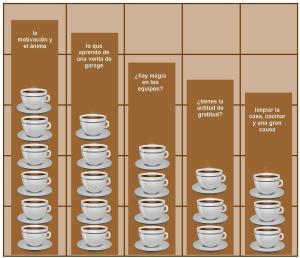
sp top 5top five Spanish posts:

la motivación y el ánimo

lo que aprendo de una venta de garage 

¿hay mágia en los equipos?

¿tienes la actitud de gratitud?

limpiar la casa, cocinar y una gran causa

You might also enjoy reading a little about me and why I started this blog:

coffee as a way of life      why a blog?

 Thanks for joining this journey! 

Please let me know… what was your favorite post this past year?