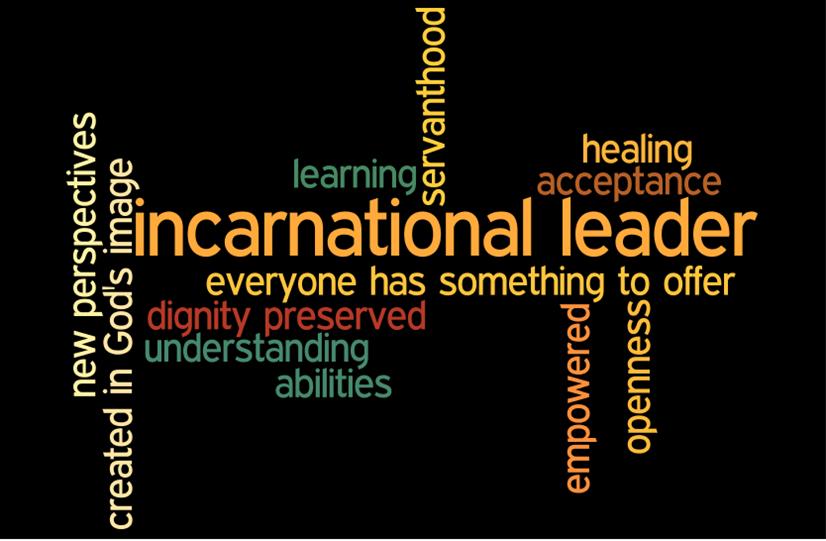
six important abilities for an incarnational leader

As promised in my earlier blog, here are six abilities that we can develop in order to develop an incarnational model of leadership. These abilities come from Duane Elmer’s book, Cross-Cultural Servanthood: Serving the World in Christlike Humility.

1. OPENNESS includes getting “out” and involved where people live and also inviting people “in” to my home and life = hospitality. Hospitality has the same root as hospital, two Greek words meaning “loving  + the stranger.” It evolved to mean connecting with strangers in a place of healing. True hospitality receives others openly, warmly, freely without any need to prove anything. Hospitality creates an atmosphere of safety and security so that deep, meaningful conversations can take place. An interesting twist to consider is that we sometimes honor others most by receiving from them rather than by trying to give to them.

2. ACCEPTANCE is the ability to communicate value, worth and esteem to another person, considering each person as created in God’s image and worthy of dignity and consideration.   A leader demonstrates acceptance when they suspend judgment. Not all judgments are wrong, but most premature judgments are! Acceptance also believes the best of people, while not being naive.

3. TRUST is confidence in a relationship when both parties believe the other will not intentionally hurt them but will act in their best interest.  Trust develops over time as we practice reciprocal need and mutual dependence successfully. Trust involves emotional risk; it is fragile, hard to gain and easy to lose.

4. ABILITY TO LEARN involves learning about, learning from and learning with others – recognizing that everyone has something to offer. Learning happens best when the leader is able to initiate and sustain interpersonal relationships and when they have a strong self-identity. People who are comfortable with themselves are also authentic and real with each other and avoid pretense in relationships. Active listening communicates a willingness to learn from the one speaking.  Another key to learning is positive, realistic expectations. These increase an individual’s ability to anticipate challenges but also to know that greater learning will be worth the effort.

5. UNDERSTANDING is the ability to find the deeper motivations and meanings behind values and behaviors. This requires pursuing the “roots” below the superficial words and actions. Too often we assume others are foolish or illogical simply because their reasoning is not self-evident to us. Understanding brings new perspectives. Forming the habit of asking Why? Why? Why? helps us to increase our understanding.

6. SERVANTHOOD is the ability to help people in such a way that their dignity is preserved and they are more empowered to live God-glorifying lives. Service takes different forms, depending on the situation, so it can’t be legislated, forced, or manipulated; if it isn’t sincere, it will come across as artificial and false.

I want to be an incarnational leader.  How about you?

Incarnational leadership is like chocolate!

As an avowed chocolate fan, I love Vianne Rocher’s chocolaterie as a picture of incarnational ministry.  The protagonist of the movie, Chocolat, Vianne is “warm, non-judgmental, and compassionate, offering grace and peace to the troubled community… She engages the lives and troubles of her community… offers space… for honesty and truthtelling to happen”.  Vianne makes transformational friendships in the community by discerning the individual (chocolate) preferences of each customer and prescribing the appropriate (chocolate) remedy for their needs.  She cares less about the success of her business and more about the concerns of the people in the town.  Vianne serves the French community with the incarnational attributes of love, self-sacrifice, and commitment.  As a result of her compassion and acceptance, Vianne’s ministry transforms the lives of individual friends and the village as a whole.*

The greatest story of transformation power through personal incarnation is God himself coming to live among us in human form through the person of Jesus (Phil. 2:7).  An incarnational model of leadership is a willingness to re-make ourselves in order to mimic Jesus more effectively in our life and work.  Incarnational ministry does not require that leaders completely give up their culture (national/gender/personality) identity.  Jesus did not give up being God; He did choose to limit certain aspects of His character and power.  Just as a body illustrates how the varied spiritual gifts are necessary to serve God completely (I Cor 13:4-31), so are elements of all cultures necessary to reflect the full image of God.         (…a whole box of chocolates!) No one culture alone is the perfect God culture.  Sometimes aspects of one culture may more closely represent the character of God than another culture; at other times, combined cultural views reflect the character of God more accurately; sometimes an aspect of culture is definitely not Biblical, and a leader should discard that value. Incarnational leadership requires a lot of reflection and effort to determine how and where to make the edits in order to be more like Christ.

Applying the incarnational servant model in leadership is not easy. It can cause self-doubt, confusion and frustration. As leaders we enter a leadership position with a deeply ingrained sense of identity that developed over a lifetime. Our ethnocentrism assumes that others do or should have the same cultural values because my view is the “best” or the “correct” view. Leaders inevitably bring pride and selfishness into the situation and often negatively judge others as inferior or wrong. Attempts to serve and lead in another culture or with multi-cultural teammates will also be affected by the others’ views of  servanthood and leadership. Remember: an action is not a service simply when called service; the action must actually be helpful to the receiver. (Which chocolate is their favorite, not my favorite to give away?) In addition, the pre-conceived opinions, perceptions, and stereotypes of others may interfere with our efforts to lead and serve.  Sometimes even though our motives are good, our actions are completely misunderstood by others, due to their own culture grid or even their own insecurities.

Applying the incarnational model to leadership begins with an attitude adjustment. Just as Jesus came as a helpless infant, so must we approach the leadership situation humbly and with a willingness to learn.

  •  The first step towards an incarnational model is self-acceptance.  This self-acceptance implies recognizing that God made each person intentionally and uniquely, and that He sovereignly allowed their lifetime experiences to develop in them the cultural values that they have at the time.
  • Secondly, it is important for a leader to recognize their personal values, but also be willing to adapt them when necessary. (Would I give up my favorite candy?) God’s power to help a people yield their own preferences and needs to those of others is an indispensable element of incarnation. Without confidence in God’s power to change lives, there would not be much hope for the difficult process of incarnation. Thankfully, with desire, effort and God’s help, leaders can change and grow in their incarnational leadership.

*The Chocolate example comes from The Shaping of Things to Come (2003) by M. Frost & A. Hirsch (pp. 33-62) Hendrickson Publishers.

*** Next blog post will discuss six abilities we can develop to grow in our incarnational leadership… stay tuned!

How do you apply an incarnational attitude to your leadership?  

parents building world leaders

Photo courtesy of Sarah Joelle Photography http://www.sarahjoellephotography.com/

In the middle of diapers, bottles, tantrums, and discipline, it may not seem like you are building world leaders, but YOU ARE! You will never invest more time, energy or love in another disciple, mentee, or young leader as you will in your own children. What you teach them when they are young is important… and is the basis for deep values and convictions they will – or won’t – have when they are adults. Here are a few “leadership training ideas” that we tried to implement as a parents that we hope have helped our children better prepare for the world tomorrow.

Value people – We taught our children to greet people respectfully. When we introduced them to someone, we asked them to respond with “hello” and a handshake or other appropriate greeting. As they got older, a “It’s nice to meet you. My name is…” was appropriate. Maybe there was a question or two more; then they could run off to play. They didn’t have to stay around for boring adult conversation unless they wanted, or it was appropriate. We felt that we did them no favor to excuse their disobedience with, “He’s too shy.” Just as God values people, they learned to value people also. As adults, they will have opportunities to say hello to the person next to them on the plane or next door, or at work. We hope they will remember their training and think, “I can do that… just say hello. If the conversation goes further, that’s great. If not, ok too. But I can show them honor and respect. I can do that.” Who knows where a simple introduction might lead…

Healthy Limits – I wasn’t sure why I didn’t like my child playing with the things in my purse. I thought maybe I was being selfish, that they were just curious and exploring. But I soon realized that children should learn healthy limits. We taught them that not everything in the house was theirs to touch or take. It was important that they learned to ask permission before touching something that belonged to someone else, whether it belonged to their brother, sister, parent, or friend. When they practiced this at home, it was not so difficult to take them to visit somewhere else. When children learn that not everything is theirs, they are better prepared as adults to be content with what is theirs and to appropriately respect the bodies and belongings of others.

Flexibility – We traveled often and needed “reproducible routine”. Especially at bedtime, we wanted a routine that was easy do somewhere else: story, prayer, maybe a favorite blanket/toy… but not complete dark, fan, no noise, etc that might be impossible in new places later. This simplicity allowed our children to be much more flexible for traveling and for practicing hospitality (sharing or giving up their room temporarily for others). They learned that, “Not everyone is always going to cater to you!” This helped to temper selfishness and “high maintenance” in the future.

Communicate – Communication skills are so important, and there are so many ways to grow those skills when children are little. The key for us was: Don’t speak for them once they can say it themselves. Even before they can talk, we taught them to communicate “please” and “thank you” with sign language. They learned to apologize and ask for forgiveness. We gave them opportunities to go to the counter to ask for a straw or napkin. When they were older, we encouraged them to talk with a teacher about getting extra help to improve a poor grade. As children learn to communicate, they gain confidence and ability. They learn to build relationships and to use their words to bring blessing to others.

These are just a few training opportunities for our young leaders. We would often say, “We’ll always love our children, but we want other people to like them too.” There are long-term benefits for our daily efforts. You are building the future!

What are some of your training opportunities?  How do you keep the future in mind as you raise up your future world leaders?

what does a movement look like?

After reading my “be part of a movement!” blog, a friend asked for more details.  He wanted to know more about what the movements looked like… I would love to share that with you.

We define a movement as “God working through a team of like-hearted people who are winning, building and sending.”


A movement will include four elements:

  • Connecting lost people to Jesus
  • Life-changing discipleship
  • Multiplying leaders
  • Generation of local resources (vision, people, ideas, funding, systems, etc.)

In both movements, it was clear God was at work.  Personal and group prayer was common – sometimes programmed, often spontaneous – due to a deep sense of dependence on God.  We studied His Word and took steps of faith.  We trusted the Holy Spirit to control us and guide us.  I don’t know that our actions “caused” the movement – that was simply God’s choice, but we were deliberate in opening our hearts so that He could work in us.

Team was another key factor.  One movement team included several full-time staff and student leaders; the other had only one staff woman and a core group of committed adult volunteers.  In each case the team was passionate about reaching their audience for Christ. The team members were also committed to each other – growing in character, communicating, sharing responsibilities, learning and training, enjoying the work and life together.  The teams were not perfect – sometimes there were personality conflicts; sometimes members didn’t do their part; sometimes volunteers decided to get involved in something else… but the team provided strength and encouragement for the task.

In both movements, we were committed to evangelism – connecting people to Jesus. In the campus movement, we intentionally and strategically shared with any student who had come twice to a meeting. We trained our staff and students how to do evangelism and went sharing together often.  The women’s movement was also committed to training and sharing Christ during their book study; they often had opportunities to share one-on-one after a small group meeting.  Both movements also organized numerous special evangelistic events. Basically, evangelism was a priority – in heart and practice.

Incredible transformation happened through life-changing discipleship. In both cases, we saw an increased desire to know God’s Word and apply it to their lives. We taught basic follow-up, the ministry of the Holy Spirit, and other Bible studies. Students chose not to lie or bribe professors for better grades. Women chose to forgive their husbands and strengthen their marriages. Dating couples chose to break off relationships instead of continuing in immorality.  Moms chose to reconcile with their children. Students chose to serve God in ministry after graduation.

Leaders multiplied.  In the student movement, we recorded discipleship chains out to four generations. In the women’s movement, we lost track of the generations! It became “normal” for everyone to invite friends to events, or take a few friends through follow-up, or lead a small group, or host a mom’s book club. Students and volunteers led in reaching areas of campus or running parts of the ministry (prayer/socials/followup) or arranging details for an event. Everyone found a place to serve.

There was no lack of resources.  The students quickly offered to bring the snacks. They began to support each other and/or work together to send each other to conferences and mission trips.  There were very few outside subsidies. The women hosted the studies in their homes, shared food for meals, and donated items and money for the evangelistic events so that they were always self-financed and often profitable. Creative ideas surfaced continually. New materials were created. Partnerships were formed. More people were recruited.

God blessed.  It became impossible to measure the impact as creativity flourished and initiative grew. Years later, the student ministry still produces laborers.  Many graduates share Christ at their workplace and lead their marriages and children to follow the Lord. The women’s ministry continues to work on projects that will expand to other cities in all of Mexico.

Connecting lost people to Jesus. Life-changing discipleship. Multiplying leaders. Generating local resources. That is what a movement looks like.

Which element of a movement is most exciting to you?

Which element is most challenging for you?

multicultural team or tension?

As our world becomes more connected globally, today’s organizations need an atmosphere that encourages a multicultural work environment. However it is a big mistake to simply put a group of international leaders on a team and expect them to achieve great results. There will be many differing values on an international team, and we need to help our leaders understand and appreciate each other in order to work together more effectively.

One great tool I have found is a book I am reading for my M.A. in Global Leadership  – When Cultures Collide: Leading Across Cultures, by Richard D. Lewis. A helpful explanation of general nationality differences divides the world’s cultures into three groups: Linear-Actives, Multi-Actives and Reactives.  

See if you recognize yourself and/or some of your co-workers or teammates in one these groups!

Linear-Actives Common characteristics of this group are affinity for schedules and plans, preference for objective data and information, task focus, less emotional and relational connections. Communication with Linear-Actives will be direct, to the point, and optimistic, often decorated with humor and idiomatic phrases.  They are quite linear in their view of time and appreciate punctuality.  Promotion at work is a result of hard work and productivity. They are known to do very well with small talk at dinner parties, but prefer all business during meetings. This group is the smallest of the three, with around 600 million members.

Multi-Actives  The Multi-Active group has over three billion members, making it the largest group. The Multi-Actives have an extroverted and loquacious manner, multitasking capabilities, and interdependent, net-working relationships. Conversation with a Multi-Active is passionate, animated, descriptive and personal. Schedule is subordinate to relationship and the event of the moment. Multi-Actives are stereotypically known for arriving late for appointments and for eating dinner late into the evening. Entry and advance in the workplace is often a result of family and/or other loyalty connections. Compassion and human understanding motivate Multi-Actives to action.

Reactives The third group that Lewis describes is the Reactive group. They have over one and one-half billion members around the world. This group is typically quiet and reserved, good listeners, respectful of others’ needs and desires, principle oriented and very concerned with saving face in relationships. They have a cyclical view of time. Communication will likely be more formal, polite, complimentary, with plenty of periods of silence. Reactives are known for their extravagant gift giving and their harmonious relationships.

Recognition of different national culture values is just one step toward understanding. There are many other cultural value differences that factor into team relationships: age, gender, personality, profession, etc.  Our authentic respect for each other and our sincere willingness to make adjustments to each other are key components to international team success. More about how to do that in a future blog…

With which group do you identify?

What has your experience been like in international settings?  

Please share a comment so that we can learn together!

be part of a movement!

My organization believes strongly in movements, but I rarely meet anyone who has ever actually seen one or been a part of one. I have had the privilege of being a part of two – one as a key player, in the other more of a mentor/coach. Those experiences were exciting, invigorating, fun, messy, fulfilling and a lot of hard work! They were dreams come true… and I’d love to help with many more. As I was doing reading for my MA, I read a chapter on movements in The Courage to Teach, by Parker J. Palmer.  It outlined four stages of movements that I recognized right away. I think understanding them might help us see many more movements in the years ahead.

Stage 1 – No more divided life

Movements start when someone decides, “I can’t take it anymore. I can’t live a life externally that is so different from my heart convictions.” In ministry that means I will follow God’s heart and do whatever,  go wherever, it takes to win ______ (fill in the blank: women, students, professionals, students, athletes…) to Christ… because that is what He has called me to do. However that might look in my circumstance and with my gifting, I won’t let discouragement, fear, busyness, small children, organizational disinterest or criticism by others get in my way. I will not blame anyone else nor the organization for my lack – I will be true to myself! We will never see God build more spiritual movements, if we don’t individually get to this place in our heart.

Stage 2 – Support in community

The next step is to take our mustard seed of faith and conviction and share it with someone else; admit to another that I want to be and do something new. It is too easy for our enthusiasm to die away without encouragement from others. Community could be our family, our team, a few friends – any other like-minded cohorts. Our community gives us mutual reassurance (“No, you’re not crazy.”), a common vocabulary for our vision, and often skills and training necessary to make the dream a reality. Working together in a healthy, dynamic team is one of the most synergistic parts of a movement.

Stage 3 – Go public

A true movement doesn’t hide behind closed doors and manipulate its people in secret. A true movement shares its vision and resources with others, seeking feedback for improvement and partnership for impact. Sometimes it seems it would be easier to stay small and private, but then we would miss the opportunity to challenge and influence others, and we would miss the blessing of working with and learning from others. Receiving  feedback from others helps us to avoid self-righteousness, self-centeredness, self-sufficiency… and helps us become more Kingdom focused.

Stage 4 – There is nothing better

Once we actually begin to experience the fruit of spiritual movement, there is nothing more inspiring! The out-of-control multiplication, the true life transformation in our disciples, the character growth in ourselves – all bring a sense of satisfaction that says, “It is so worth it! There is no price I paid that was too great, no prize you can offer that would be worth more.”  I don’t want to invest in anything less.

Have you been a part of a movement? Please tell me about it! I’d love to learn from you…

are you dangerous?

I first saw this Creed in Judy Douglas’ post: Are You a Dangerous Woman? on her blog:  www.inkindle.wordpress.com              (Thanks, Judy!)

It was written by Lynne Hybels, writer, speaker, and wife of Bill Hybels.  She wrote it as the “Dangerous Women Creed” and it is presented below as it was printed in 2008 Synergy Program.

Although it was written specifically for women, I believe it is powerful for any person!

Dangerous Women Creed:
Dear God, please make us dangerous women.

May we be women who acknowledge our power to change, and grow,

and be radically alive for God.
May we be healers of wounds and righters of wrongs.
May we weep with those who weep and speak for those who cannot

speak for themselves.
May we cherish children, embrace the elderly, and empower the poor.
May we pray deeply and teach wisely.
May we be strong and gentle leaders.
May we sing songs of joy and talk down fear.
May we never hesitate to let passion push us, conviction compel us,

and righteous anger energize us.
May we strike fear into all that is unjust and evil in the world.
May we dismantle abusive systems and silence lies with truth.
May we shine like stars in a darkened generation.
May we overflow with goodness in the name of God and by the power of Jesus.
And in that name and by that power, may we change the world.
Dear God, please make us dangerous women. Amen.

I want to be dangerous.  How about you?

anger management 101

Have you ever been so frustrated and angry that you weren’t sure what you might do? Someone didn’t do their share, left you unprotected, criticized you unfairly, took credit that wasn’t theirs… As I was coaching someone through their anger the other day, I realized I was “talking to myself”. I decided I better write down my tips; I might need them myself tomorrow!

1. Ventilate and validate – I’ve learned that it is ok to go ahead and “let it out” with a SAFE person. Anger and frustration are a normal, often very valid, part of life. It is so much better to verbalize the frustration than to drown it in food, drugs or alcohol… or haul off and hit someone. A safe person won’t use my reaction against me, but they might “push back” a bit against my reasoning, or find some bit of humor in my extreme emotions, or guide me to God and spiritual truth in the situation – all good for me and part of the process.

2. Consider my part – Once I’ve calmed down a bit, the next step is a willingness to consider that I might have some responsibility in the problem or, at least, that I might have something to learn through the situation. No matter what others have done, I am  called first to look at myself and what I can change in me… I don’t want to fall into the blame trap or the victim mindset.

3. Find some good – When I am angry, I see only the bad; I am blind to any good or positive element. We are in a spiritual battle and, no one is exempt. History proves that our anger can progress to judgment, stereotypes, and hatred of whole people groups – some pretty nasty stuff. Instead, I can turn to friends or God for help and discipline myself to find something that I can appreciate and be thankful for in the midst of difficult circumstances.

4. Follow through – Sometimes I need to deal with whatever caused the frustration and anger and initiate a difficult conversation, require restitution, or apply consequences… If it falls under my authority or responsibility, I need to follow through with appropriate action with the person – not just let it slide and keep grumbling behind their back. If there is “nothing” I can do, I can always review steps 1-3!

How do you handle your anger?

remembering 9-11

No matter who we are or where we were during the 9-11 attacks, we remember and were affected. I pray that God will continue to redeem that horrendous tragedy for good, showing us once again His power and love in the midst of pain and suffering. I also pray that we learn from that sad day and grow into leaders who reflect His grace, forgiveness, and hope to a hurting world…

Here’s a tribute video – (You may like it more if you are a country music fan!)

running for my life

runner free digital photo Sura Nualpradid
My birthday caused me to consider how to best invest the next years of my life. Often good physical health contributes to reaching other dreams, so I got motivated to lose some weight and increase my running routine.

In the process, I learned about reaching other life goals!

  • Getting better takes time – I am not a patient person; I prefer instant results. However, I am learning to persevere and trust the process. There were weeks when I wouldn’t lose one pound, and I wanted to give up, but if I kept doing the right things, I would finally see the weight drop. I often want to quit in other areas of life also – habits I can’t break, changes I can’t make, or relationships that aren’t working like I want. If I stop trying, I guarantee not getting better… but if I give it time, doing the right things, I just might get results!
  • Getting better takes hard work – I have never really liked to run. For me it is just plain discipline. Some days I feel pretty good; some days my feet feel like lead. Often, if I push through the first discomforts, I start to feel better and go farther than I initially thought I could. No great athlete achieves success without consistent practice, lots of sweat, and often pain. Neither will I get better – personally or professionally – without intentional effort. I have found that an honest evaluation (like a 360) and a personal development plan, accompanied by a coach or mentor, can help me grow and improve. 
  • Plan for hard days and easy days – A training plan allows for “pushing for distance” days and rest days. Going all-out every day will inevitably lead to injury and burnout. Life is similar. There are days when I have to give more than I have to handle a conflict, help someone, or get something done on time, and there are days when I need to rest. Without the rest, I don’t have the energy needed for the tough times, and I am resentful and tired. When I am regularly refreshed and rejuvenated, I have the stamina and strength to give the extra effort – even when it’s hard.
  • I am unique –  My husband can eat a lot more calories than I can and still lose weight. But, I am not my husband, and my weight-loss plan is not the same as his. Nor is my exercise plan the same as his… nor is my life plan the same as his! I need to stop comparing – and complaining(!) – and figure out what will work for me. Often I want to “cut and paste” someone else’s gifts or abilities or experience into my life, but God has a singular, individual plan for me. 
  • Getting better gets harder – Many people can run one mile or lose a few pounds. On the other hand, keeping weight off or running a marathon is much more challenging. As much I as would like to have earned an easy road due to past accomplishments, that is not how real life works. Instead, the older I am, the more responsibility I get, the more leadership I take on… the harder it is to get better! There is no “downhill” slide. It will always be “uphill”, and I don’t want that truth to surprise or discourage me.
What are principles that help you reach your goals?