What was it I needed to do?

Photo credit: pni / Source / CC BY-NC-SA

Photo credit: pni / Source / CC BY-NC-SA

Have you ever gone into a room and forgotten what you went in there to find? Ever forget someone’s name? Ever spend time looking for something because you couldn’t remember where you put it?

These are normal events for most people. At my age, however, they are becoming more worrisome. Some days I worry about losing my memory.

My dad has Parkinson’s and dementia and it saddens me to watch him struggle. I am reading books about dementia and memory loss diseases to learn how to help him, support those who do his care-giving, and understand some of his challenges.

I am also learning how to prevent or at least diminish the potential for my own memory loss. This past week, I read a great biography about a daughter caring for her dementia-affected mom: Inside the Dementia Epidemic: A Daughter’s Memoir. Besides communicating honesty, empathy and encouragement, the author, Martha Stettinius, offers great appendices of resources – one contains suggested antidotes for dementia.

This is a summary of what she writes:

Exercise

Studies show that thirty minutes of daily physical activity (housework, walking, weight training, etc) may be our strongest weapon against Alzheimer’s and other memory loss diseases. Aerobic exercise increases blood flow to the brain and stimulates growth of new brain cells.

Mental Stimulation

Add social community and mental stimulation to exercise and you have a great combination. Work, join a club, volunteer, travel, play games – especially crosswords or puzzles, learn to speak another language or play an instrument. Do these things in relationship with others and your brain continues to make connections too.

Eat Right

Nothing new here right? A good diet helps with a lot of things! Eating dark veggies and fruits, cold water fish (salmon, tuna, mackerel) and nuts (almonds, pecans, walnuts) also decreases the risk for memory loss. Vitamins E, C, and B12 may also help. Cut back on sugars and carbs wherever you can.

In addition, Stettinius suggests that you get checked if you have vision problems, sleep apnea or an infection that damages neurons. Researchers consider each of these as possible catalysts for dementia and Alzheimer’s.

This all seems pretty basic and these are health tips I have heard before. I am just a bit more motivated to take them seriously each time I hear about someone else caring for a loved one who suffers memory loss… and that is often. There are 35.6 million people with dementia worldwide today and analysts expect that amount to almost double by 2030 to around 66 million and double again by 2050 to approximately 115 million.

I am going to do what I can so that I do not add to that number.

How about you? Do you need to change some habits? Or did I already ask you that?

¿Qué es lo que iba a hacer?

Photo credit: pni / Source / CC BY-NC-SA

Photo credit: pni / Source / CC BY-NC-SA

¿Alguna vez has entrado a un cuarto y olvidado de lo que fuiste allí para encontrar? ¿Has olvidado el nombre de alguien? ¿Talvez perdiste tiempo buscando algo porque no podías recordar dónde lo dejaste?

Estos son eventos normales para la mayoría de la gente. A mi edad, sin embargo, son cada vez más preocupante. Hay días cuando me preocupa la posibilidad de que voy a perder mi memoria.

Mi papá tiene la enfermedad de Parkinson y demencia y me entristece verle sufrir como resultado. Estoy leyendo libros sobre enfermedades de demencia y la pérdida de la memoria para aprender cómo ayudarle, apoyar a mi familia que lo cuida y comprender algunos de sus desafíos.

También estoy aprendiendo cómo prevenir o al menos disminuir el potencial de mi propia pérdida de la memoria. La semana pasada, leí una gran biografía, Inside the Dementia Epidemic: A Daughter’s Memoir (Dentro de la Epidemia de la Demencia: Memoria de una Hija), sobre una mujer que cuidaba de su madre quien estaba afectada por la demencia. Además de la comunicarse con honestidad, empatía y estímulo, la autora Martha Stettinius ofrece grandes apéndices de recursos – uno contiene antídotos sugeridos para la demencia.

Este es un resumen de lo que escribe:

El ejercicio

Los estudios muestran que treinta minutos de actividad física diaria (tareas domésticas, caminar, pesas, etc) pueden ser nuestra arma más fuerte contra el Alzheimer y otras enfermedades de pérdida de memoria. El ejercicio aeróbico aumenta el flujo de sangre al cerebro y estimula el crecimiento de nuevas células cerebrales.

La estimulación mental

Añadir comunidad social y la estimulación mental con hacer ejercicio y tienes una gran combinación. Trabaja, unirte a un club, ofrece servir como voluntario, viaja, entretenerte con juegos – especialmente crucigramas o rompecabezas, aprende a hablar otro idioma o tocar un instrumento. Haz estas cosas en relación con otra personas y tu cerebro sigue haciendo conexiones también.

Comer Bien

No hay nada nuevo aquí ¿verdad? Una buena dieta ayuda con un montón de cosas! Comer verduras y frutas, peces de agua fría (salmón, atún, caballa) y nueces (almendras, nueces china y de Castilla) también disminuye el riesgo de pérdida de la memoria. Las vitaminas E, C y B12 también pueden ayudar. Reduce el consumo de azúcares y carbohidratos donde puedes.

Además, Stettinius sugiere que vayas con un doctor si tienes problemas de visión, la apnea del sueño o una infección que daña las neuronas. Los investigadores consideran cada uno de estos como posibles catalizadores para la demencia y el Alzheimer’s.

Todo esto suena como básico y estos son consejos de salud que he escuchado antes. Yo estoy un poco más motivada para tomarlos en serio cada vez que oigo de alguien cuidando a un ser querido que sufre pérdida de memoria… y eso es a menudo. Hay 35.6 millones de personas con demencia en el mundo hoy en día y los analistas esperan que equivale a casi el doble en 2030 – alrededor de 66 millones y que duplique de nuevo en 2050 a aproximadamente 115 millones.

Yo voy a hacer lo que puedo para no añadirme a ese número.

¿Y tú? ¿Necesitas cambiarte algunos hábitos? ¿O ya te pregunté eso?

grief comparisons

sadness

Photo credit: Wendy Longo photography / Foter / CC BY-ND

It has been three months since my mom died. Sometimes it feels like years ago. Sometimes it feels like yesterday.

I have not been able to write a blog post since that day. My mind has been foggy, scrambled, gray, and unclear. Some days my heart felt heavy, sad, and lifeless. Other days, I have sensed the warmth of her memory in the flowers and sunshine that she loved so dearly.

During the past months, some friends have asked how I am doing and others have kept an awkward distance, unsure of what to say.

Family members have all processed their grief uniquely, sometimes drawing close to each other, sometimes pulling apart because of tensions, anger, or a desire to process pain alone. Some have cried; others held their emotions in check; still others could not find tears even when they tried. Some went right to work arranging details; others were paralyzed by their loss.

In these three months, numerous other friends have also lost loved ones – children, siblings, parents, friends. Sometimes the deaths arrived as expected, peaceful, a long-awaited transition to a better place. Other deaths came suddenly, violently, shaking family foundations of faith and security.

Some of my friends experienced death much like I did… at the bedside, providing care and comfort, counting the minutes as they turned into hours. Other friends had no opportunity to sit nearby at the end or intentionally chose not to go there. Some appear unaffected by their grief; others are clearly rattled, and others experience a bit of both depending on the day.

I have found myself occasionally comparing my particular experience and my emotional response with others. However, I am learning that we cannot compare our different experiences with death any more than we can compare our different experiences with life. 

There is no right or wrong way to do this. There is no standardized approved amount of time, feelings, involvement, or impact that death brings to a person. Each birth, each person, each death is unique.

And so, for me and for you…

Take all the time you need.

Feel whatever it is you feel.

Do what you can and leave the rest.

Give grace, especially to yourself.

Chose safe people and safe places.

Sleep. Cry. Dance. Work. Laugh. Yell. Remember.

Don’t judge.

Don’t compare.

It is grief and so it will be.

∼∗∼

comparaciones de luto

sadness

Photo credit: Wendy Longo photography / Foter / CC BY-ND

Han pasado tres meses desde que mi mamá murió. A veces se siente como hace años. A veces se siente como si fuera ayer.

No he podido escribir un post desde ese día. Mi mente ha sido de niebla, revuelta, gris y poco clara. Algunos días mi corazón sentía pesado, triste y sin vida. Otros días, he sentido el calor de su memoria en las flores y el sol que tanto amaba.

Durante los últimos meses, algunos amigos han preguntado cómo me va y otros han mantenido una distancia incómoda, sin saber qué decir.

Cada uno de mi familia ha procesado su dolor de forma individual, a veces acercándose el uno al otro, a veces alejándose debido a las tensiones, la ira o el deseo de procesar el dolor a solos. Algunos han llorado; otros sostenían sus emociones bajo control; todavía otros no pudieron encontrar sus lágrimas incluso cuando intentaron. Algunos se fueron directo a trabajar en la organización de los detalles; otros fueron paralizados por su pérdida.

En estos tres meses, muchos otros amigos también han perdido a seres queridos – hijos, hermanos, padres, amigos. A veces la muerte llegó como se esperaba, pacífica, una transición anhelada a un lugar mejor. Otras muertes llegaron de repente, violentamente, agitando fundaciones familiares de la fe y la seguridad.

Algunos de mis amigos experimentaron la muerte como yo… acompañando en la cabecera, proveyendo cuidado y confort, contando los minutos que se convirtieron en horas. Otros amigos no tuvieron la oportunidad de sentarse cerca durante el final o intencionalmente decidieron no estar allí. Algunos no aparecen afectados por su dolor; otros están claramente sacudidos y otros experimentan un poco de ambos, dependiendo del día.

Me he encontrado en ocasiones comparando mi experiencia particular y mi respuesta emocional con los demás. Sin embargo, estoy aprendiendo que no podemos comparar nuestros diferentes experiencias con la muerte más de lo que podemos comparar nuestros diferentes experiencias con la vida.

No hay una manera correcta o incorrecta de hacer esto. No hay una cantidad estandarizada ni aprobada de tiempo, de sentimientos, de participación, o de impacto que la muerte lleva a una persona. Cada nacimiento, cada persona y cada muerte es único.

Entonces, para mí y para ti…

Tómate todo el tiempo que necesites.
Siente lo que es lo que te sientas.
Haz lo que puedas y deja el resto.
Da gracia, sobre todo a ti mismo.
Elige a personas y lugares seguros.
Duerma. Llora. Baila. Trabaja. Reirte. Grita. Recuerda.
No juzgues.
No compare.
Así es el luto y así será.
~ * ~

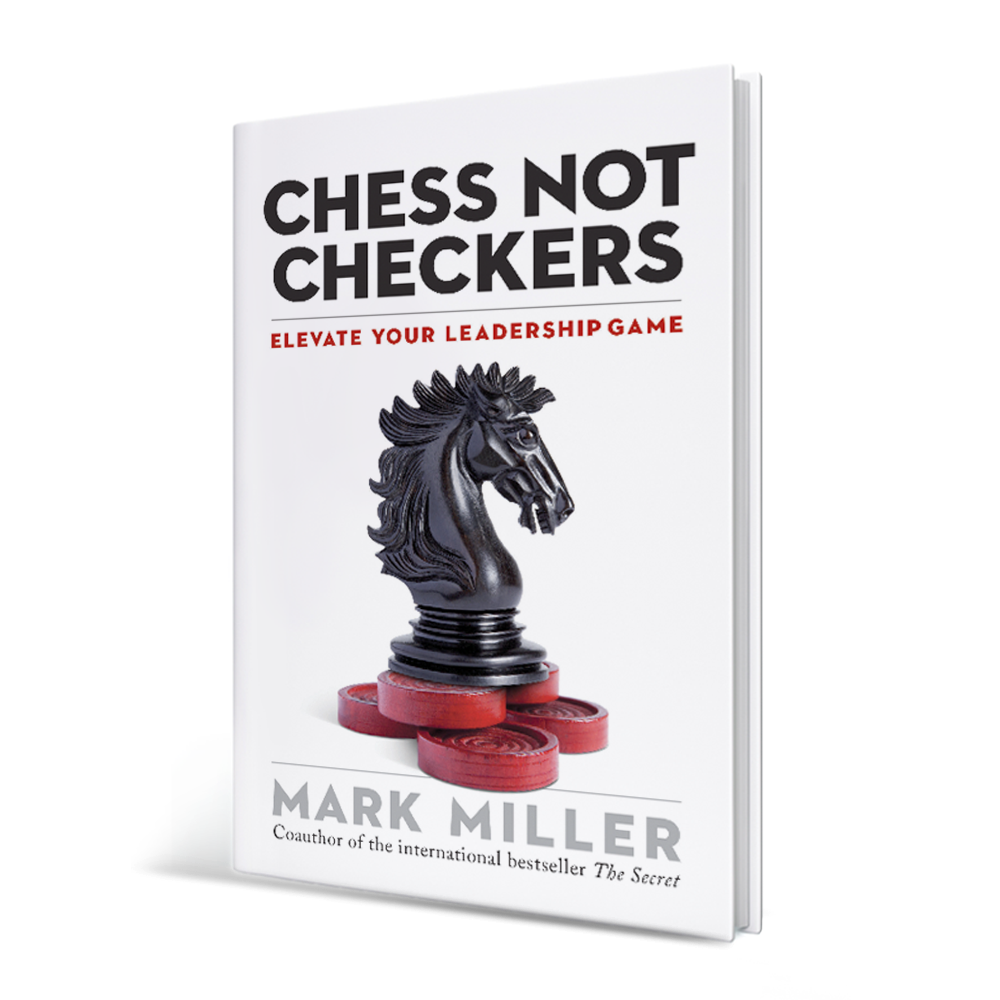
chess not checkers

I don’t even know how to play chess, but I loved this book! chess not checkers

In typical Mark Miller style, he writes the book as a story, weaving humor, wisdom, care, and pragmatism in a quick, easy-to-read format. The main character, Blake Brown, takes a new CEO job in a struggling organization. Work is frustrating and drudgery, teamwork is non-existent, morale is weak, and customers are going elsewhere. The game has changed, old strategies aren’t working, and losing is miserable for everyone.

Blake begins to meet with a chess master mentor who teaches him four simple – yet essential – principles for playing a new game in today’s complex world:

1. BET ON LEADERSHIP – Identify and invest in emerging leaders. Mark gives excellent tips about developing yourself, your team, and the organization.

“…proactively develop your leadership.
The earlier in their career you invest in them, the better.”

“Leadership growth always
precedes organizational growth.”

2. ACT AS ONE – We know this as alignment, and it requires excellent communication. Mark describes it with a helpful illustration:

“Think of your organization as a car
driving at high speeds down a bumpy, dirt road.
The car will constantly be knocked out of alignment.
Part of your never-ending role is to keep the organization
aligned on what matters most.”

3. WIN THE HEART – Greater engagement happens when you allow people to contribute their unique gifts and work using their personal strengths.

“This is the way you need to look at your people.
When you deploy them thoughtfully,
you create greater value.”

4. EXCEL AT EXECUTION – This involves the important areas of resource allocation, measurements, and systems versus personality design.

“To help your team improve execution,
measure what matters most.”

There is much more in the book. I highly recommend that you pick up a copy today!

Any leader who implements these timeless principles will grow personally and improve the game plan for their team and their organization.

Which of these principles is most urgent for your situation? How can you apply new and improved strategy in your context?

Check out the great book trailer video HERE!

You can also find Mark Miller blogging on his website, Great Leaders Serve.

I also wrote a summary and review of some of Mark’s other books: The Secret and The Heart of Leadership.